Thanks for all of your comments on the last post. The list of rulesets I’ll be trying so far is:
Use Me Sci Fi
Combat Zone
Laserburn
Vor The Maelstrom
Grim Dark Fire Fight
Donald Featherstone’s Skirmish Wargame
Donald Featherstone’s Close Little Wars
Mutants and Death Ray Guns
Wasteman
Space Weirdos
Void Pirates
Planet28
One Hour Skirmish Wargames
Brutality Skirmish Wargame
Minigangs
Rogue Stars
Stargrave
Five Parsecs From Home
Flying Lead
Starguard
The Simple Toy Soldier Game (of course to throw my own hat in the ring)

There’s also a possibility of other more out there things, but I’ll save those for later.
My main concern this post is to figure out a rating system for the rules in question. My brother and I have constant debates about films, and my go to criteria for ‘best film ever’ is does the film achieve what it set out to do? Often we end up on arguing whether Texas Chainsaw Massacre or Cannibal Holocaust are the ‘best film’, as few often achieve so well what they set out to do. So is that a good enough place to start with wargame rules?
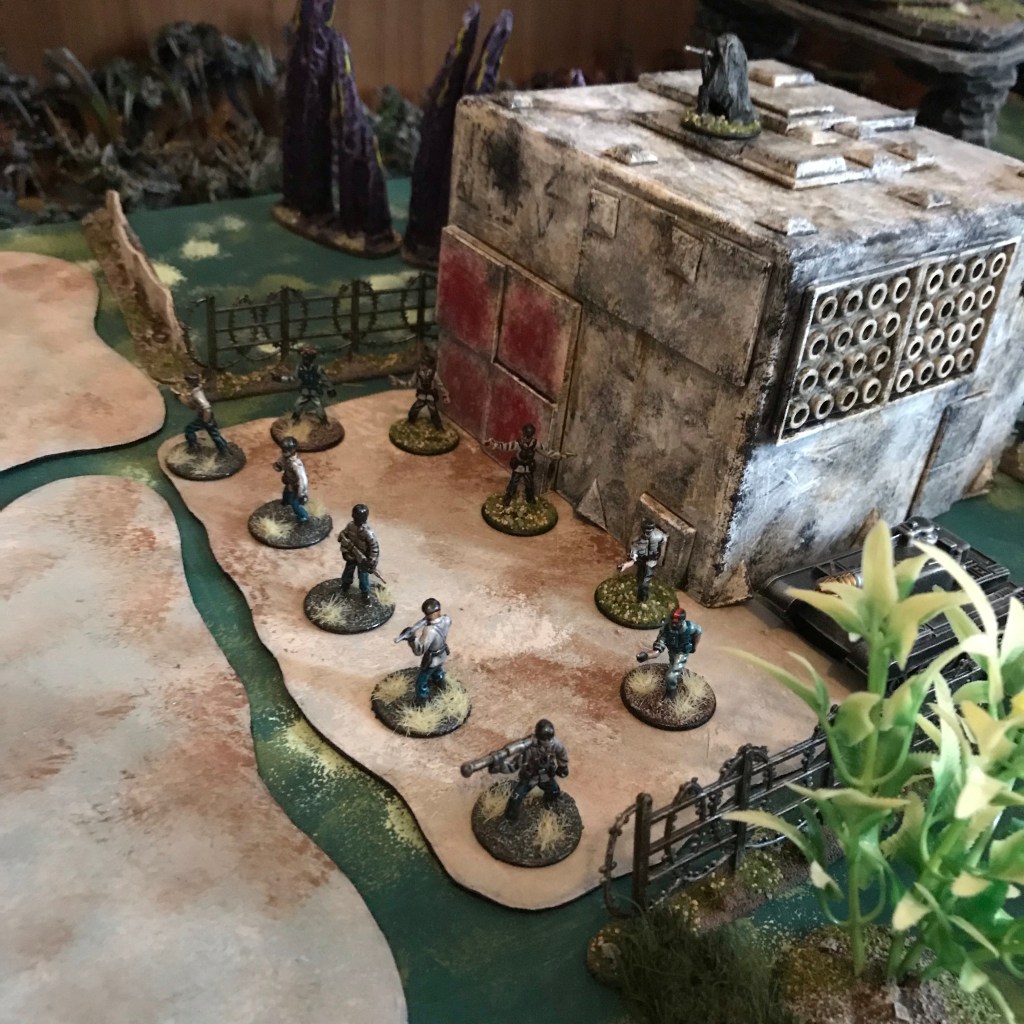
Watching Little Wars TV on YouTube I’ll also have to steal some of their criteria too. Accessibility, playability, price and support (maybe not historical accuracy), but maybe how well said rules do as a reflection of their chosen reality? Are there additional sci-fi elements to the rules? Or is this just WW2 in space? Scalability might also be an option, how well would these rules scale up from skirmish to big battle? Again though I’ll have to keep coming back to – how well do the rules do what they set out to do.

What elements do you think are or are not important? And have I missed any?
Maybe in the end once I’ve cherrypicked all of the best bits in each set and combined them I’ll have the best set of rules ever?

 Deathzap
A major consideration is, are moves slowed by excessive detail in rules? ‘Historical accuracy’ is another one,but it becomes interesting when it is an invented history or another world.
off the top of my head: Cinematic plausibility. How compelling and enjoyable that encounter would have been to watch on screen. The best battles can be recalled in this manner as they have flowed so well on the table top. Mentally inking in those energy beams, the groans of one protagonist as a man goes down, flames, explosions, vehicle engines, etc. I play a lot of 2mm. imagine the din!
Have you considered Xenos Rampant? For example, see https://gridbasedwargaming.blogspot.com/2022/11/a-xenos-rampant-game.html
Not sure about that phrase – how well do rules do what they set out to do? Isn’t it more important that they do what you want? For example, a set of rules that set out to simulate the logistics of supplying a battlefleet in deep space might achieve that superbly, but do you want to play that game? And of course, it depends on whether you plan to use the rules as they are (nah!) or plunder them for ideas (yay!). So, I’d stick with a bullet-list of your wants, add a liberal dash of open-mindedness, and have a ball checking out the rulesets (and sharing with us!).
That’s pretty much right. I basically mean did the rules writer achieve what they wanted. If it’s a deep simulation they wanted how well did they pull that off, if it was something quick and dirty are there unnecessarily clunky mechanics in there that slow it down and therefore don’t do what the rules writer wanted. I think it’s the only way you can really compare rule sets in a more objective way.
I have, I get the impression that xenos rampant is a slightly larger game than I’d like – platoon on platoon rather than squad on squad sort of affair? Could be that other rules I’ve already listed are in that same boat though.
Enjoyment, relevant decision making for the scale of operation modelled, and speed of play would be my top three.
Regards, Chris.
Thanks!