This past week I’ve been away at a Church Camp with my Church’s Youth Group, so as you can imagine there’s been a lack of hobbying. Corralling teenagers takes up a lot of time.
I did have pondering time though, and with the religious atmosphere, I’ve been considering how religion functions in my own Deathzap setting. You could remove religion entirely from a fictional setting, however I think if a setting were to be missing religion entirely it would be a notable absence. Maybe strangely, religion and sci-fi seem to go hand in hand, at least in some pretty popular settings – Dune, Warhammer 40k and Star Wars all have religion and religious conflicts at their core.

Is it bad for me as a religious person to imagine religious violence? I personally don’t think so. However your mileage may vary, answers on a postcard please (or in the comments). The other challenge is since Deathzap is a sci-fi setting rather than a fantasy one, it has, like many sci-fi settings, imagined the future of humanity in a specific way. This means that it has also imagined the future of my own faith tradition (Church of England to be precise). So if my ‘team’ doesn’t appear in my own setting, it does mean I’m also imagining the death of my own team at some point in human history. Steven Moffat does imagine the Church of England’s future as a futuristic military force in Dr Who, but I find that somewhat unlikely.
Having said that, death isn’t the only end for my team, transformation happens frequently within religion. While I’m C of E now, making me a Protestant, roughly 500 years back and I’m Catholic, roughly 1000 years back and I’m Christian (prior to the great schism), roughly 2000 years back and I’m a Proselyte Jew (that’s of course imagining any consistency between those things, I know scholars would disagree, especially as even the term ‘religion’ is a modern one).
Deathzap takes place in 6350AD/CE, and imagining a massive shift in my own faith tradition roughly every 500 years, that’s 8 or 9 shifts from now. So even if the C of E is still going in 2150AC (that’s after the colonisation of the planet Jendar), it would presumably be so different, it may not be entirely recognisable.
It also important to consider if Deathzap is meant to be an attempt at foreseeing the future or an attempt at commentary on our current time. Two things which may not always be mutually exclusive, however they seem to be two different trajectories.

I have already mentioned faith in Deathzap a couple of times, but only in passing, however it would be good to honour those mentions:
“Queen Ora Baranor and Minister Adrak Thrace, Sir” announced Coldan’s assistant. The Prime stood up from his desk and wandered over to greet his arriving guests. He attempted to exude confidence and power, his blue and white cloak covered large padded shoulders, he wasn’t a small man but they made him seem twice as big. The Minister entered first, he looked like a rat draped in human skin. He fidgeted and sniffed the air, turning his nose up and exposing yellow fangs. Then a beautiful, young woman entered. He hadn’t seen her since she was a child. The Prime ignored the Minister and bowed. “Highness.”
“Thank you Prime” she answered.
“I have also invited Hegemony leader Adan Cell” Coldan announced.
Minister Adrak visibly winced.
The Prime hid is smile.
“I apologise for my Minister” Queen Ora explained, “He is a member of the Sanctified Temple, Synths are an affront to his beliefs.”
So there’s a Sanctified Temple which is Anti-Synth and present in House Baronor. Also:
The newly formed League and Legion battled for supremacy on the peninsula that had been given to Arrjak. The war lasted two Ashnyran years (four and a half Jendari years), and ended in a stalemate. Each year since the end of the civil war both sides submitted champions once again to the arena, their blood paying the toll to the death goddess Malorad, so she wouldn’t reap the planet once again.
The duels turned into skirmishes, the skirmishes into battles and spread out from the arena, until the entire peninsula was engulfed in the contest now known as Warsport.
So Warsport on the Planet Ashnyr between the League of Zandor and Legion of Kharthion is a sacrifice to the Death Goddess Malorad. And while I’m sure some would see that more metaphorically, there’s no doubt be a few to take that idea seriously.

This is all something I want to ponder for some time as it’s a subject I’m rather interested in, additionally I’d like to do some reading on what various trains of thought there are on the future of human religion. But for now here’s what I’m thinking:
On the moon of Kannis, Mortan’s Men worship Darros Mortan, an actual semi-immortal cult leader. I’m not entirely sure what his theology looks like, but it seems like something to do with genetic engineering.
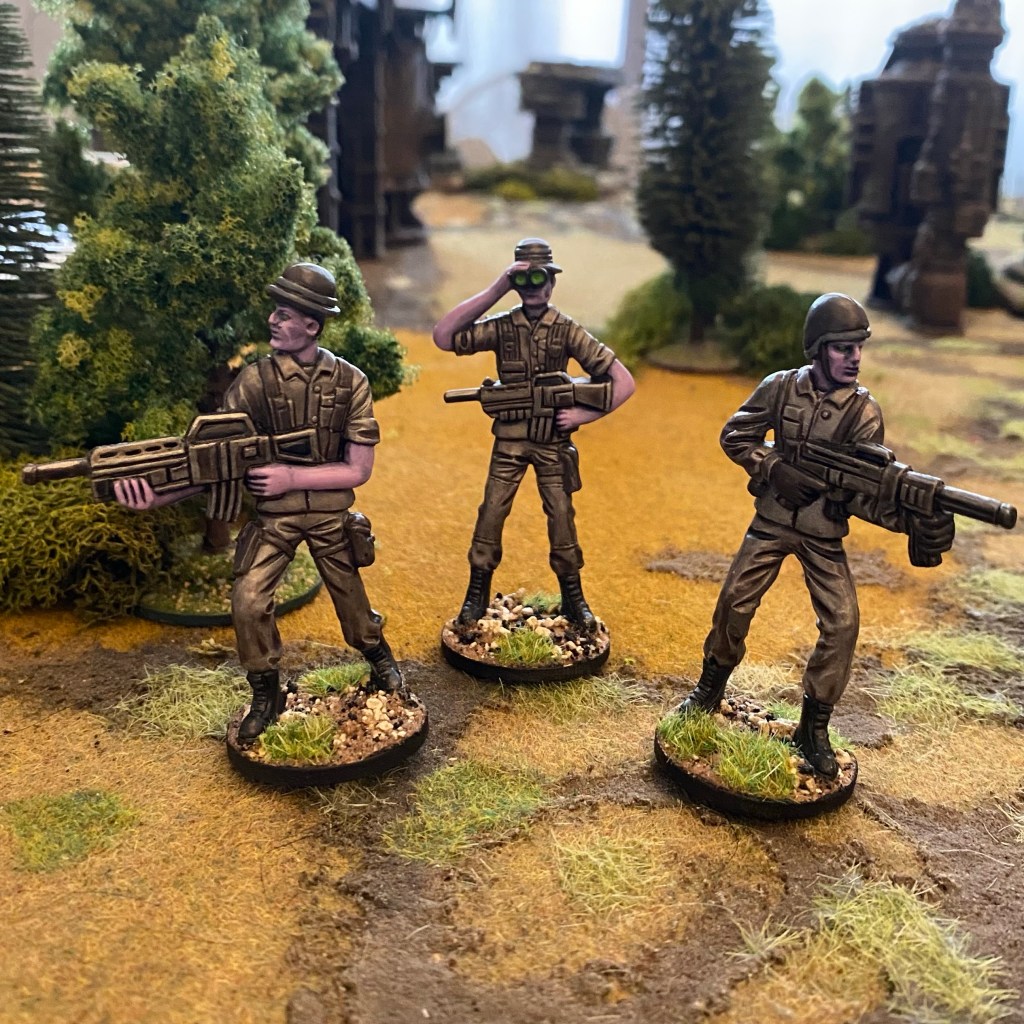
On Jendar, we have The Sanctified Temple which I imagine is a more extreme splinter faith that split from The Temple, the main religion on Jendar, a sort of straightforward monotheism… if that’s a thing…
On Gnossos, the most technologically advanced faction, I think it would be easy to imagine an entirely secular society, and that would provide interesting conflicts and challenges when they ally with other factions, however I also think that’s the most obvious route to take, something which I don’t often like doing. So they’re something to ponder.
On Ashnyr the League of Zandor and Legion of Kharthion have their Death Goddess. And I think I’d like to expand their pantheon outwards. I’ve been imagining them as a Greece vs Rome kind of situation, and creating two very similar rival pantheons could be fun.
If you have thoughts or ideas, let me know. I’m currently pondering Panpsychism and worship of AI for futuristic religions. Of course this is all before I fully flesh out the religions of the Selenoids, Khydran, Vel, Void or Ectomites.

 Deathzap
That is nice paintwork on Mortans ascended. Some time ago I incorporated wizards and sorcerers in my fantasy campaign. I use the Warhammer Fantasy magic lists and rules. I also use the magic rules in Wars of Ozz. magic is not identical to religion but is the use of prayer a kind of magic?
In a mundane use for ‘vanilla’ historical gaming, a priest can bolster a unit’s morale. I use this with certain armies. In my fantasy campaign I have extended this by having magical abilities. A priest, and especially a high priest, can negate magic attacks on the unit he is with or near. He can also attempt to make the Undead army units crumble. I made sure my Beerstein army had priests with its army. Their crusaders also have strong magic defence. As Beerstein was fighting Undead invaders they made good use of the religion. The capital also had a church/temple which further enhanced the priestly abilities.
Another factor is that religion can foster fanaticism such as when there is a crusade, making troops less likely to waver in attack and defence.
I like that mechanically. I mostly play Bolt Action outside of my own games, and feel the influence of Chaplains, Commissars or Kempeitai.
Great read, thank you!
One of my favorite books of all time is A Canticle for Leibowitz. It shows how religion, specifically Catholicism, stands the test of time through the centuries. I highly recommend it if you get the chance.
Religion definitely belongs in sci-fi and, I would argue, anything with human beings. Looking at know history it seems to be hardwired into us. When it is absent, the sci-fi or fantasy settings feels implausible, at least to me.
Thanks! And I’ll check that book out!
Interesting subject – thanks for sharing. I tried using eastern faiths in my essentially western fantasy historical setting for multi era campaigns. It failed – to jarring. I agree with you that religion/faithetc. Are intrinsic and even in imaginary worlds need to work with the other material. It makes fantasy authors even more impressive when they create that bit of back story as well.
Of course, for Gnossos, being entirely secular, they will come up with something they follow with ‘religious zeal’. To quote Chesterton, ‘When men choose not to believe in God, they do not thereafter believe in nothing, they then become capable of believing in anything.’
I think this has been a thoughtful mediation on religion in wargaming. Though its not my cuppa IRL, I think its really interesting how faith or a faith could evolve over those millennia you projected, and permutate based on who’s preaching or where it’s being preached. This exploration you’re embarking on has tons of potential, and I’d be really interested to see how and if your rules and lore might reflect the following:
From what you’ve posted so far, the Deathzap setting is fertile ground for this kind of exploration and I can’t wait to see where you go with it!