Being away this week visiting family means no physical hobby for me, but I still love to engage in the mental – writing lore and rules. And despite being on the back burner I had promised to produce a few religious to add flavour to my own Deathzap setting. So here you go:
Cyclism
Religious Symbols – Circles, Spirals, the Infinity Symbol, the number Eight
Cyclism began shortly after the arrival of colonists on the planet Jendar. Religious scholars believe this arose subconsciously due to the idea that Jendar was a second attempt at Earth. Cyclism does not usually worship a deity per se, but focuses on cycles of time. Practically this works out in the observance of specific days and festivals, with the New Year having particular religious significance. Among Cyclists there are multiple philosophies which generally focus on the length of a cycle of time. Overall Cyclists believe time to be circular, with the end of the universe, or some event at the end, causing the universe’s beginning. Some believe each moment in time is an individual cycle, where the consciousness or soul of a person moves along from cycle to cycle like an object being propelled along a system of rollers. The goal of Cyclism then, depending upon various traditions, is either to escape the cycle, known as Escapism or to become one with or gain control of one’s own Cycle, known as Realism. Although scholars of Cyclism ironically note the similarity between the two views, that they loop around and connect with each other.
Cyclism is most prominent within the Jendari Collective, with roughly 20% of Jendar’s population claiming to be Cyclists.
One particularly notable Cyclist monk Azan Alzor of the Ariban Monastery claimed that through meditation he could slow his own Cycle relative to others around him. Azan Alzor is reported to have lived (according to monastery records) 250 years, from 1284AC to 1534AC.
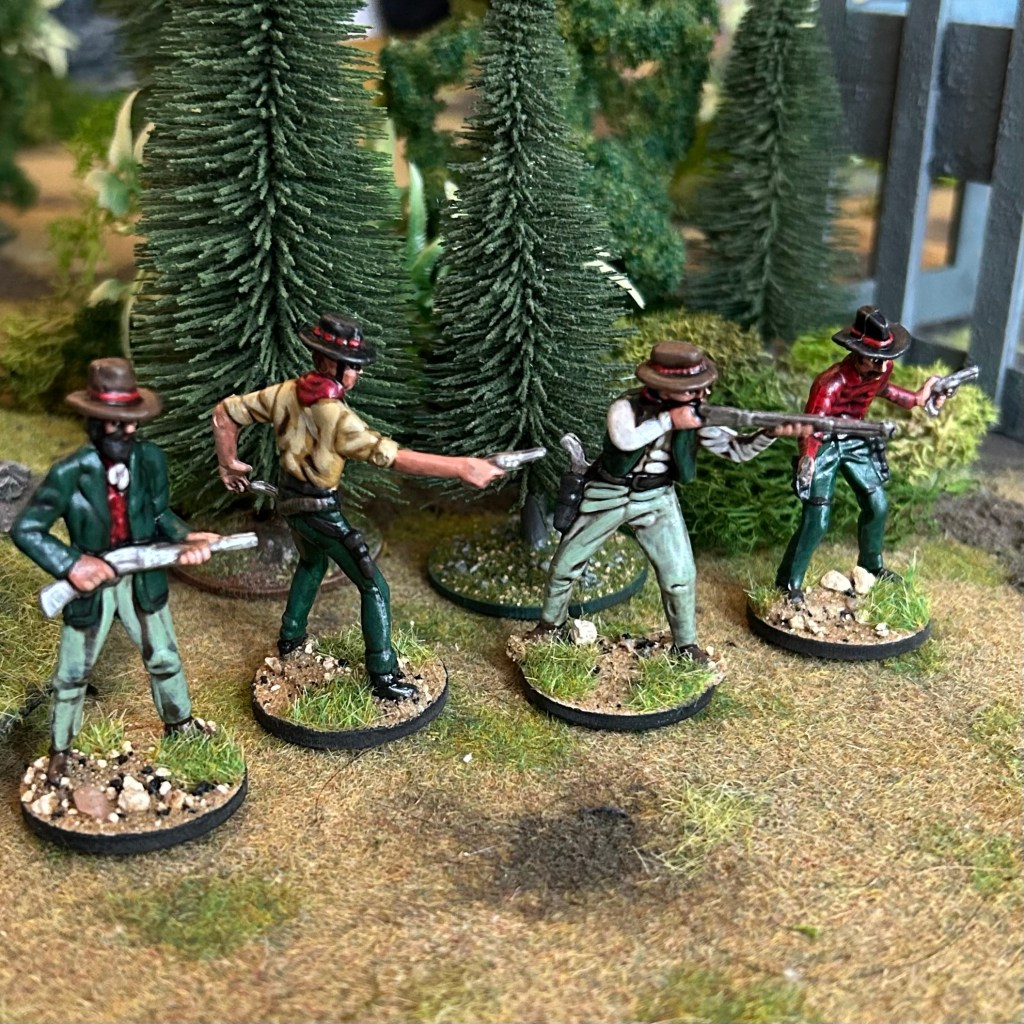
Temple
Religious Symbols – Primarily the letter T. The Temple also make use of any religious symbol seeing themselves as unifiers of all faith traditions.
The Temple emerged on Earth around 2400BC (before colonisation). It was a small movement at first growing out of the more liberal arms of Earth’s Religions, pushed forwards mostly by Christianity, Islam and Judaism. The Temple gained further prominence after its adoption by various formerly secularised states as a state religion, seeing it as a positive force in global peace efforts and religious unity.
The Temple emphasised the incomprehensibility of God or the Divine to man, and the belief that any faith tradition would have some truth, but could not have a monopoly on all truth. There was a strict rejection of any religious dogma, seeing a more close minded approach to the divine as a form of idolatry. “The Temple is built on many Pillars and no single Pillar can hold the weight of the Divine Roof.” High Priest Peter Calphae (1505-1596AC)
The Temple is prominent across Jendar, and is currently the largest faith with roughly 40% of Jendar’s population claiming to be Temple Members.
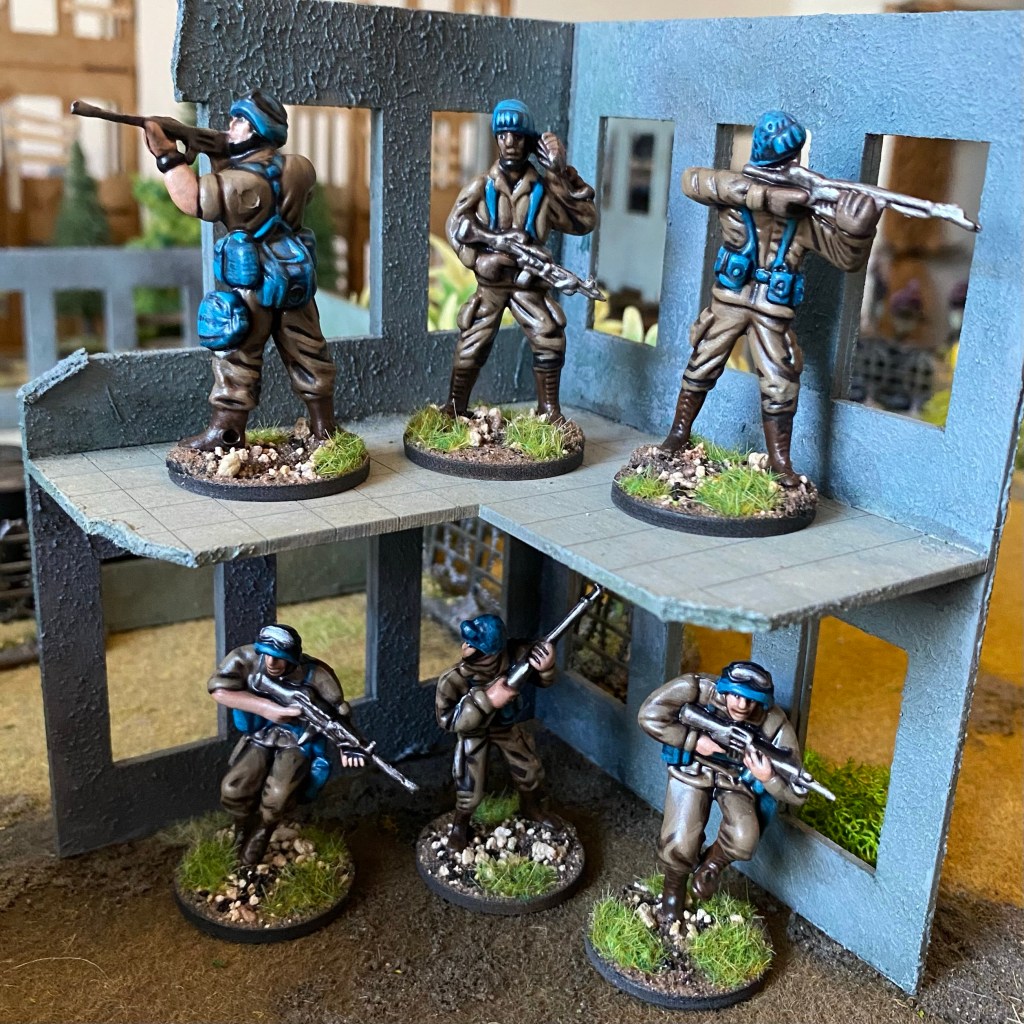
The Sanctified Temple
The Sanctified Temple or The Reformed Temple emerged around 2000AC (after Colonisation) due to the preaching of two former Temple Priests Attican Verse and Kol Wynn. Two events sparked their ‘reformation’, the first was the acknowledgement of Cyclism (among other newer Jendari faiths) as official Temple ‘Pillars’. The newly forming Sanctified Temple rejecting Cyclism and demanding The Temple only stick to Earth’s older faiths. The second was the Synth Rebellion on Ashnyr in 1998AC. Fear of Synths and conspiracies related to Synths grew exponentially, and the Sanctified Temple with its particularly strong anti-synth emphasis garnered public attention and support.
The Sanctified Temple is most prominent within House Baronor, with roughly 15% of Jendar’s population claiming to be Sanctified Temple members.
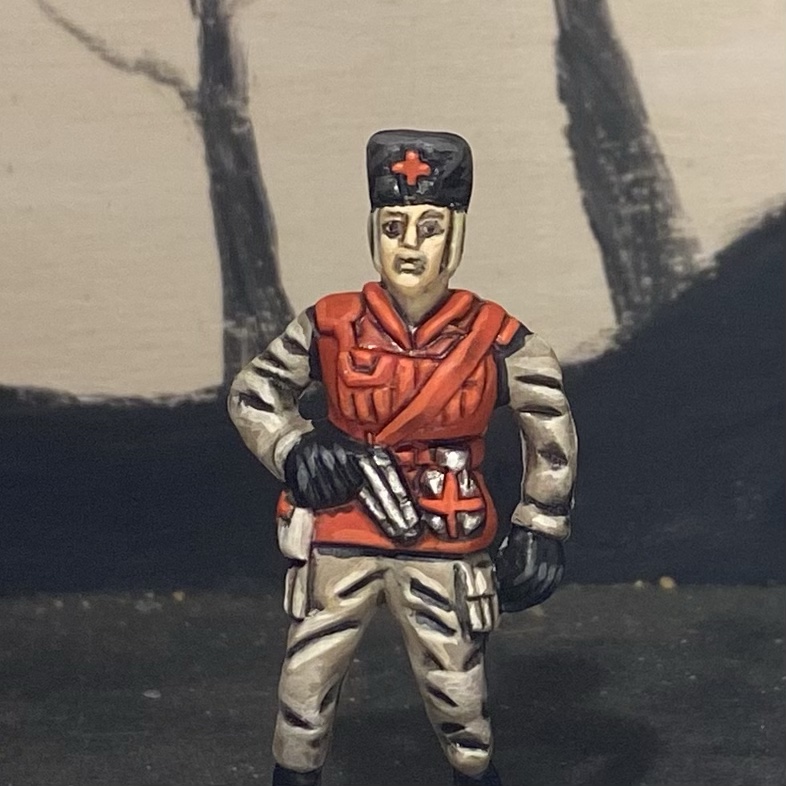
The New Temple
The New Temple have no religious symbols.
Splintering off from both The Temple and The Sanctified Temple, the New Temple are characterised by their anarchist and pacifist beliefs. According to New Temple members they had no founding date and have no leaders or hierarchy. Members of the New Temple are characterised by their all white or light beige clothing, and always carrying and handing out food or flowers to strangers. New Temple members also eschew all material goods and live simple communal lives.
It’s difficult to calculate New Temple membership but it is growing as of 2150AC.
Some lesser Jendari faiths include Gnostic Cyclism, Volkism, Urzatz, Selenoidism, Mortanism and Vesh.


 Deathzap
I really like this post. I can see the creative spark in your writing – something I tend to lack.
Religion is a primary cause of warfare across human history and so historical gamers can’t get far without colliding with it. Of course it adds a further dimension to the narrative especially when you get it driving everything. Medieval France was beset with religious strife for example – Albigensians anyone? That history also provides masses of detail too.
Now when it comes to imaginations or fantasy you can either steal what someone else has created or do it yourself.
In my case I tried and failed. Not having the imagination to created new religions I tried stealing real ones and repurposing them both in a different geography and time. It failed because “I did not believe” in the resulting botched creation. The mashup remained unbelievable so it all got abandoned.
So my question is have you had any problems “believing” the religions you have created? Do they sit well in your imaginary wars? Given your detailing – which is fantastic – I am guessing – you have not had any problems.
Absolutely fantastic comment!
In answer to your question, I suppose what made it easier believing my own religions is that the wars came first and the religions second.
So House Baronor and the Jendari Collective have been at each other’s throats for centuries already, with odd breaks where they united for a bigger threat. So I imagined culturally that they likely had different religious perspectives too, but there had to be some uniting force.
Since in my mind the collective is Asian coded, I thought a Buddhist like faith would make sense, hence Cyclism, I’d already thought of the Cambar region as focused on farming so emphasising cycles of nature just made sense. In the far west of House Baronor I think of them as imperialistic and royalist, so a sort of restrictive monotheism made most sense.
The Temple came from where I imagine Earth’s current religions ending up, so that came the uniting force, and then I just imagined a more restrictive version.
Something I learned from the YouTube channel Religion for Breakfast was that religions often intermingle and borrow things from each other. So going from restrictive monotheism in the west, to an open more liberal monotheism in the centre and a more Buddhist-like faith in the east, should make sense.
It’ll be interesting to see how things pan out, and if those faiths start to have an active role in my wars or if they’ll just be additional flavour or set dressing.
Great stuff – I had an essentially western world but decided to go east and also picked up on Buddhism Confucianism then look at the mathematical and administrative religions of Chinese history which was all very interesting and I am great to Wikipedia for the ease of getting the jist of how some things developed and as you say built off each other. My failure was the western armies and background just shouted western religions. Definitely a better idea to have fantasy countries and armies with invented religions I think.
I could imagine a western coded nation utilising some sort of state religion similar to Buddhism or Confucianism after some kind of revolution. The enlightenment could have forced Europe to abandon Christianity altogether and move into a simple deism which then might have developed a spiritual practice that was like Buddhism.
Or I could imagine a western coded setting similar to Germany (before Germany lol) with all the various small kingdoms maybe adopting a deity from a pantheon, so you end up with a warring pantheon, with then a religious revolution putting an end to it, settling on one more distant or just different god, and then them all adopting a Buddhist like faith.
I suppose it all depends on what your back story is.
Fascinating-it does depend on your imagination and in my case the narrative or back story didn’t gell. I have to reign in my ideas which is different problem to imagination so it all got abandoned. If I did fantasy as in everything was invented then I could probably make something work in my head.