Points systems are contentious things, broken at worst (see Warhammer 40,000) and a necessary evil at best. The goal of any points system is to have a game that is balanced, so both players in any given game can feel like they have an equal chance of winning. The only real alternative is very specific and restricted scenarios.
Points systems are inherently ahistorical as no general sends their troops into an even fight, and one of the issues I have found with Deathzap is that while my world is a science fiction setting, I do want my games to reflect something of reality in that universe. At the same time, if I want a balanced or even unbalanced scenario it’s a good idea to have a ballpark idea of what balanced looks like. In my last game, what I thought would be balanced was a long way off.
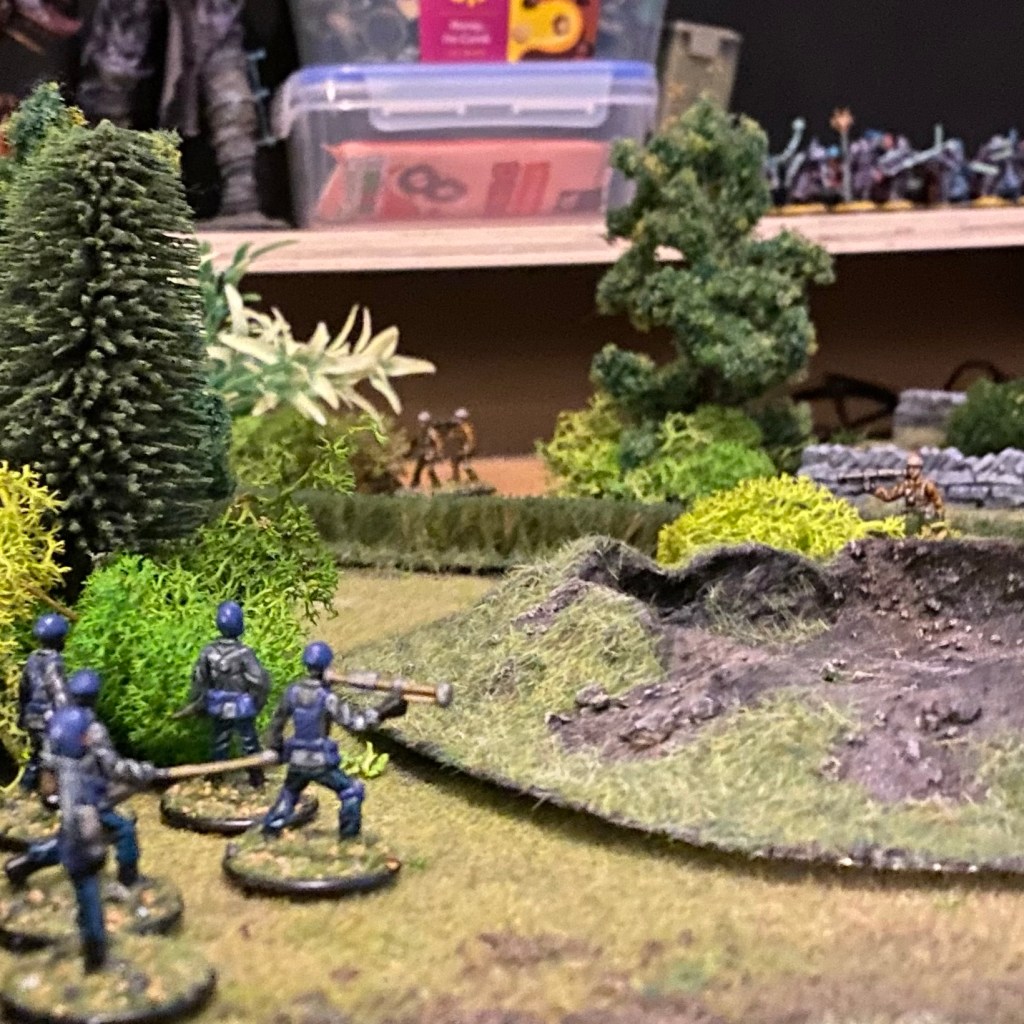
The 28 Guards of House Baronor we’re practically slaughtered by the 12 Rangers and 3 Cambarian Stalkers.
So where do you start when writing a points system?
I suppose there are two tools at your disposal, brute force and maths. Maths to get things started, and then brute force of playtesting to tweak your initial values.
Deathzap is currently simple enough that I can easily get the ball rolling. At first I thought a single figure could be worth the highest values of its two dice combined. So a Basic figure shooting and fighting in melee with a D6, and wearing light armour so saving with a D6 could be worth 12 points, simple enough. At the higher end of things then you could have an Elite figure (D12) in heavy armour (D12), costing 24.
This was where I was at in my previous game.
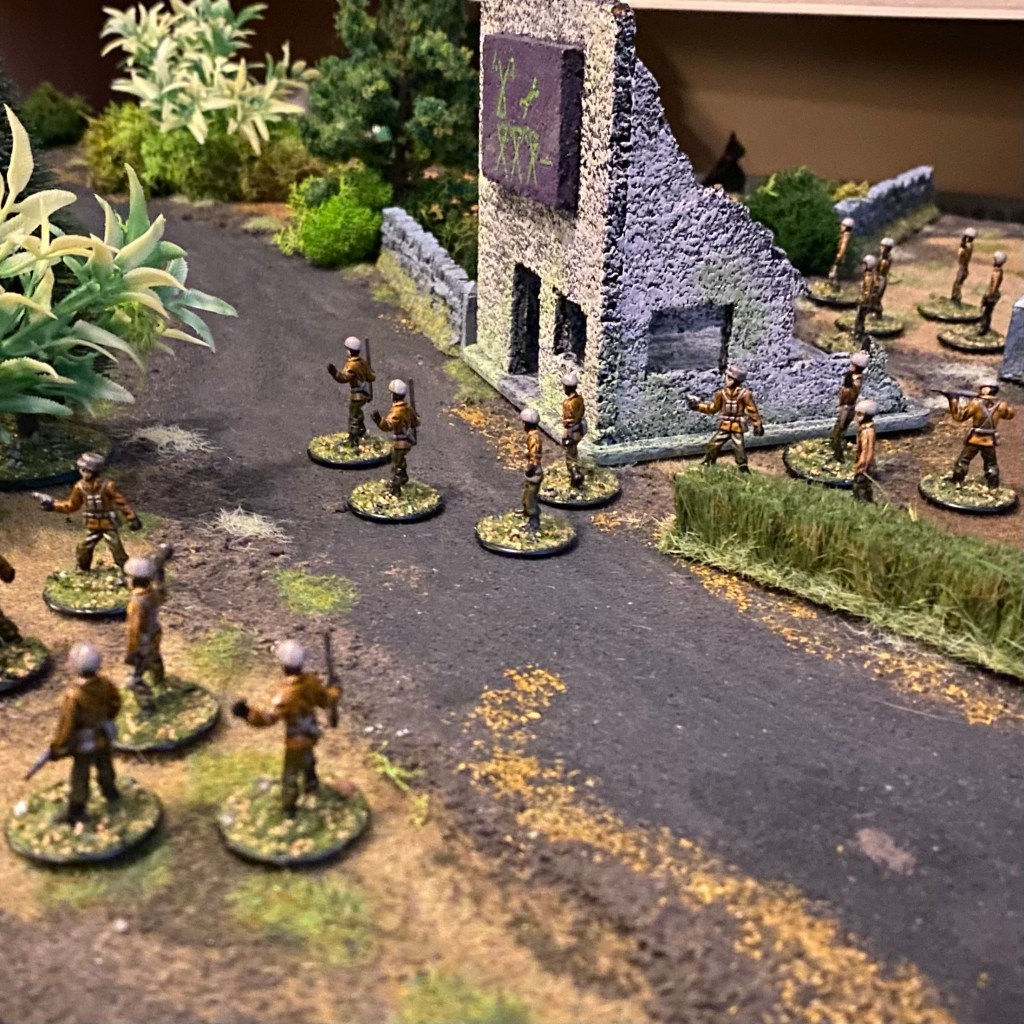
But I was way off.
Which seems obvious now, with that system two Basic figures in light armour are supposedly worth the same as a single Elite figure in heavy armour. Imagining that rather small game of Deathzap, with both sides having cover, statistically it’s going to take three turns before the Regulars have even hit the Elite. Which they’ll need to do four times to statistically kill the Elite, so 12 turns to (sort of) guarantee the kill. The Elite on the other hand is (sort of) guaranteed to wipe out the first Basic within 4 turns, which shoots the other Regular’s kill of the Elite up to turn 22 (I think), and they’ll be killed by the Elite by turn 8.
My game’s outcome makes more sense now…

Trying to find a good starting point I multiplied things instead of adding. D6 and D6 goes to 36, D12 and D12 goes to 144. Making that Elite equal to four Basics. Which feels better.

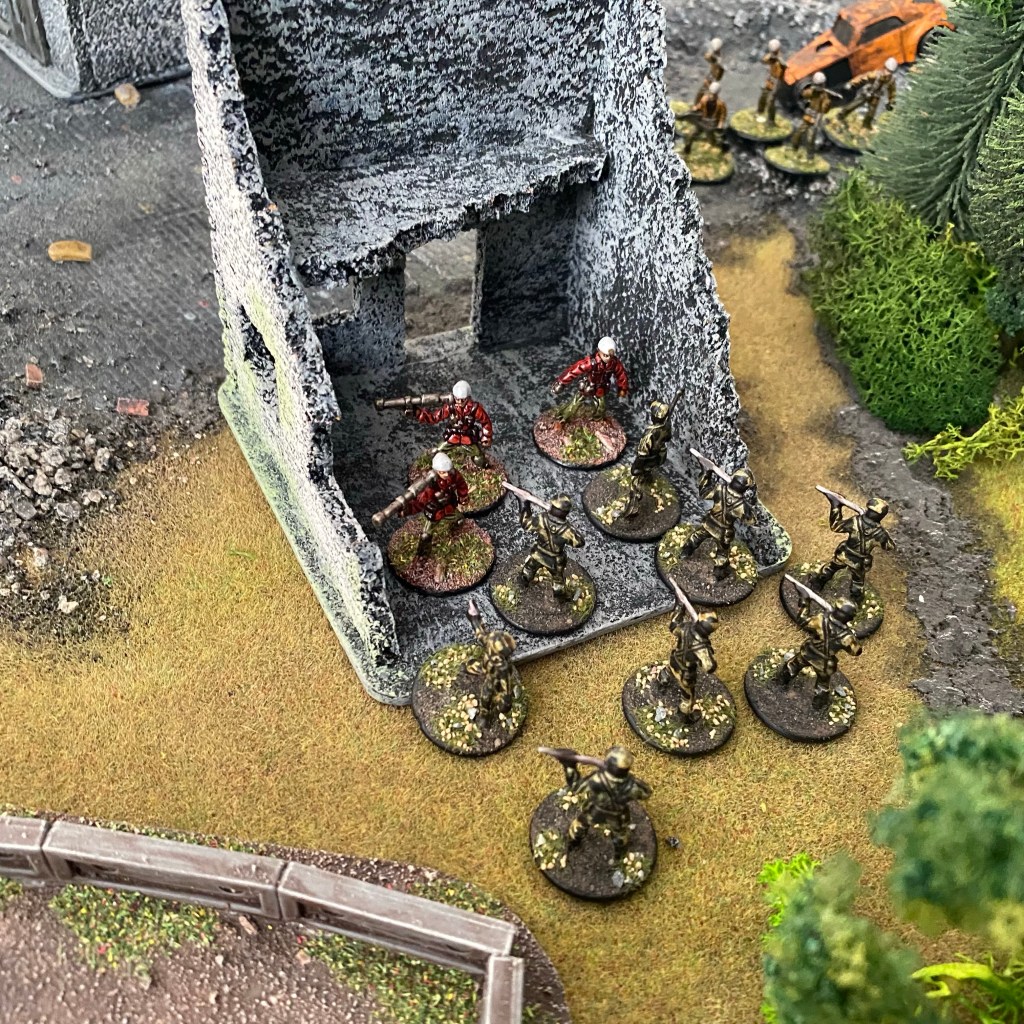
Rather than just theorising, I played out this fight for real, and after 10 tries, the Elite Ranger won 4, the Regular Guards 6. Which verified my thinking, with the Elite worth 3 point something Regulars. There are other things to consider as Deathzap includes vehicles, monsters and other weaponry, but I think that’s enough points talk for now, I’ll figure out additional bonuses later.
An update to the current rules I’m using is below:
DEATHZAP
The game then is played in turns, each turn being made up of 2 phases and played in the order listed below.
PHASE 1: Movement
Roll off to determine which side moves first. Half Infantry and Beast movement if they need to cross an obstacle or any part of their move is across rough ground.
Infantry and Heavy Vehicles – 6”.
Vehicles and Beasts – 12”.
Monsters – 9”.
Monsters and Vehicles Ramming
When a Monster or Vehicle moves they can Ram instead. Move them in a straight line up to their normal move distance, any Non-Monster, Non-Vehicles make saving throws (4+) if they are in their path, any figures that fail their save are killed, any that survive are moved by the shortest route until they are out of the Monster’s/Vehicle’s path. Their Ram stops if they move into another Monster or Vehicle when a normal melee combat is fought.
Melee Combat: When two figures come into base to base contact immediately resolve their fight (unless they are a Monster or Vehicle charging or ramming Infantry and Beasts). Roll the melee die of both fighters, with the higher roller killing their opponent. Reroll ties. Melee dice are the same as dice for shooting: Basic D6, Regular D8, Veteran D10, Elite D12, Heroes D20. Beasts get a +2 modifier and Monsters a +4.
Vehicles in Melee Combat: Vehicles get a +2 modifier and Heavy Vehicles a +4. If a vehicle wins the combat and their opponent is infantry or a beast then neither are killed, and the infantry or beast figure backs off 1”.
Multiple Opponents: If you want you can have multiple attackers face off against a single target in melee. Declare that is your intention and then move as many figures into base to base contact with a single target as you want. Only roll 1 die for each side, but add 1 per additional combatant. All combatants are killed on the larger side if the combat is lost.

PHASE 2: Shooting
Both sides fire, with Heroes going first, then Elites, then Veterans, then Regulars and finally Basics. Shooting is resolved for both sides simultaneously within each skill step, with casualties being removed at the end of each step.
Normally roll 1 die to hit for each gun firing:
Basic shooters roll a D6, Regulars D8, Veterans D10, Elites D12 and Heroes D20.
4+ to hit a target in the open.
6+ to hit a target in cover.
If a hit is achieved the target makes a saving throw needing:
4+ if hit by Small Arms, Repeaters or Grenades.
6+ if hit by a Destroyer.
2+ if hit by anything but while inside a bunker and the shooter is outside.
Targets with No Armour or Shields roll a D4, Light D6, Medium D8, Heavy D10, Very Heavy D12. Monsters and Vehicles can only be harmed by Destroyers or Grenades.
Firing Repeaters: Repeaters can make D6 shots per shooting phase.
Throwing grenades at enemies outside of buildings: 12” range maximum. Roll to hit as normal, and if a hit is achieved then all enemies within 2” of the figure hit are also automatically hit.
Firing destroyers or throwing grenades at buildings: 2+ to hit the building, 6” range maximum for grenades (you need to be closer to accurately lob a grenade through a window etc). All enemies inside the building then make saving throws (4+). For larger buildings divide them up into sections, only hitting all figures within a section.

 Deathzap
Some thought on points: if you have a campaign and two players choose the makeup and dispositions of their armies no two sides will be identical in a battle even if both players began with the same credits to buy troops. We use secret movement so we don’t know what we will encounter until an enemy army is encountered.
In my own fantasy campaigns the countries resources were decided randomly with different credits produced by different types of hexes. This meant the two main countries did not begin with the same credits to buy points worth of troops although they had similar numbers of hexes.
The choices with points involved decisions between lighter troops and heavier ones. There were limitations on how many of certain types could be had in any one army, restricted partially by what troops are physically available for a battle. Credits also had to be allowed for supplies with each unit consuming a credit each map move or tabletop game.
Like QUANTRILLTOY I have tended to base troops on economics rather than battle. But almost by definition it isn’t really a system that is any use for occasional games or even campaigns without the economic background. I think your current system of multiplying rather than adding does seem to be a good system for what you need.
Those are all great ideas! I’ll have to use something along those lines in my next campaign.