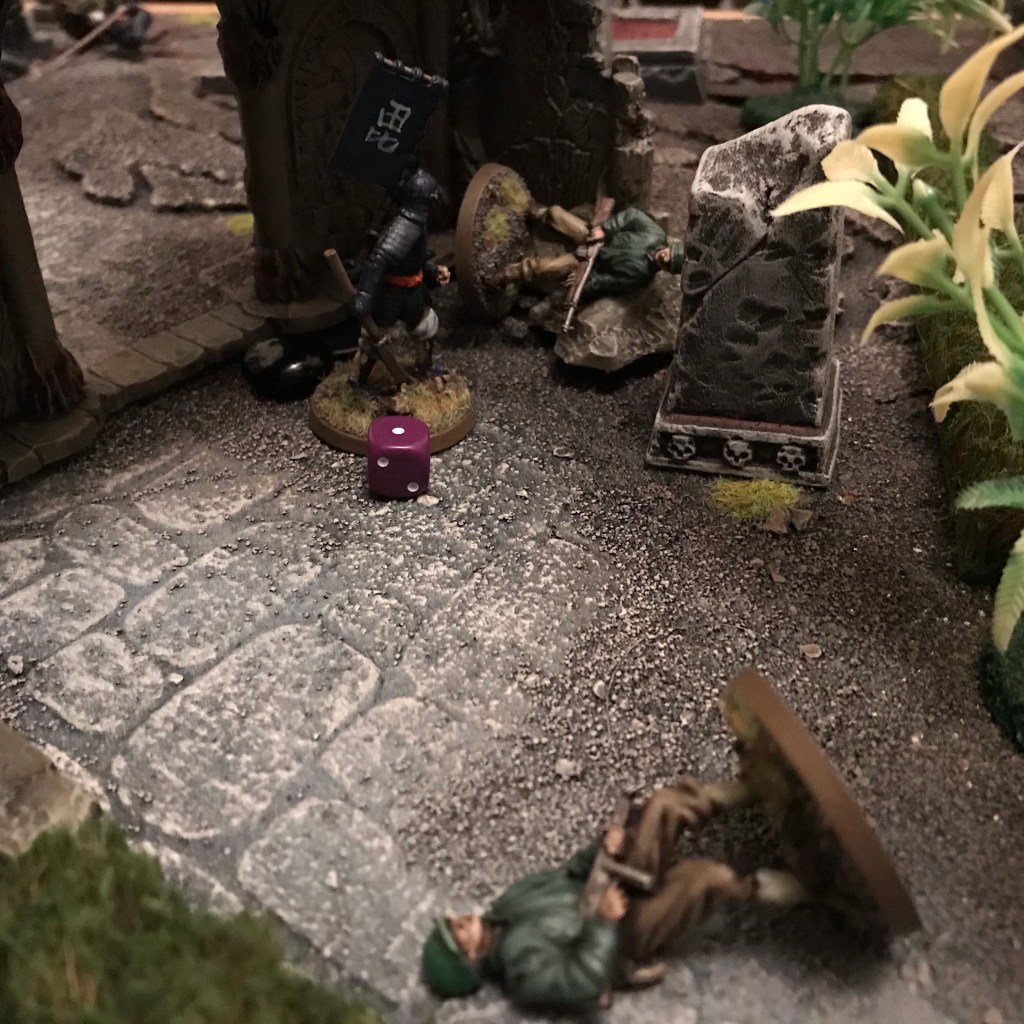
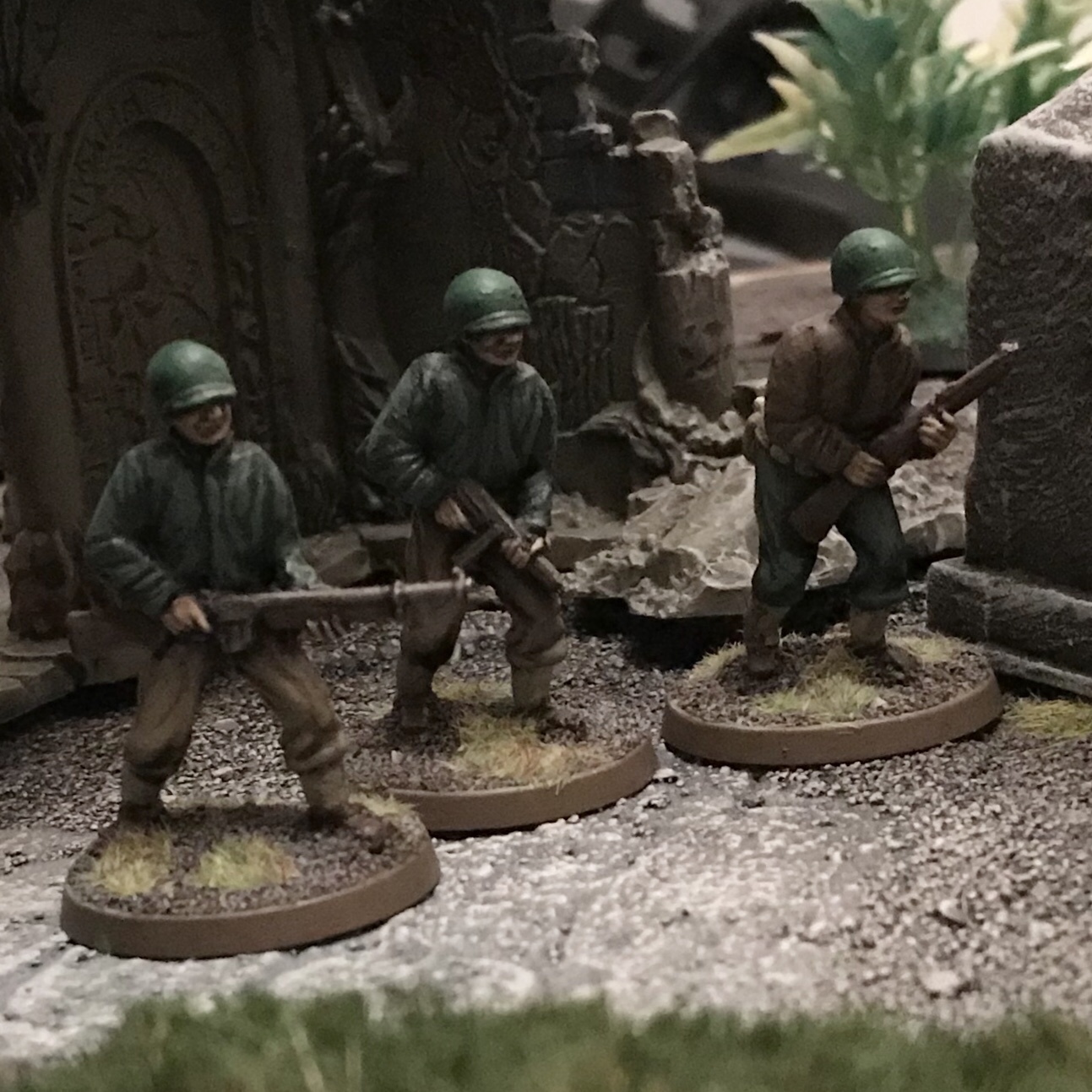
To give you some idea, the photo above is from a recent game of mine where a Samurai took out two US Rangers in a single turn! I started out writing the rules for this version of Ghost Legions by adapting my own Simple Toy Soldier Game rules but I wasn’t feeling it. I had something that worked, but I just knew Ghost Legions needed to be Featherstonian. So I took to my various volumes from Donald Featherstone and started pinching ideas.
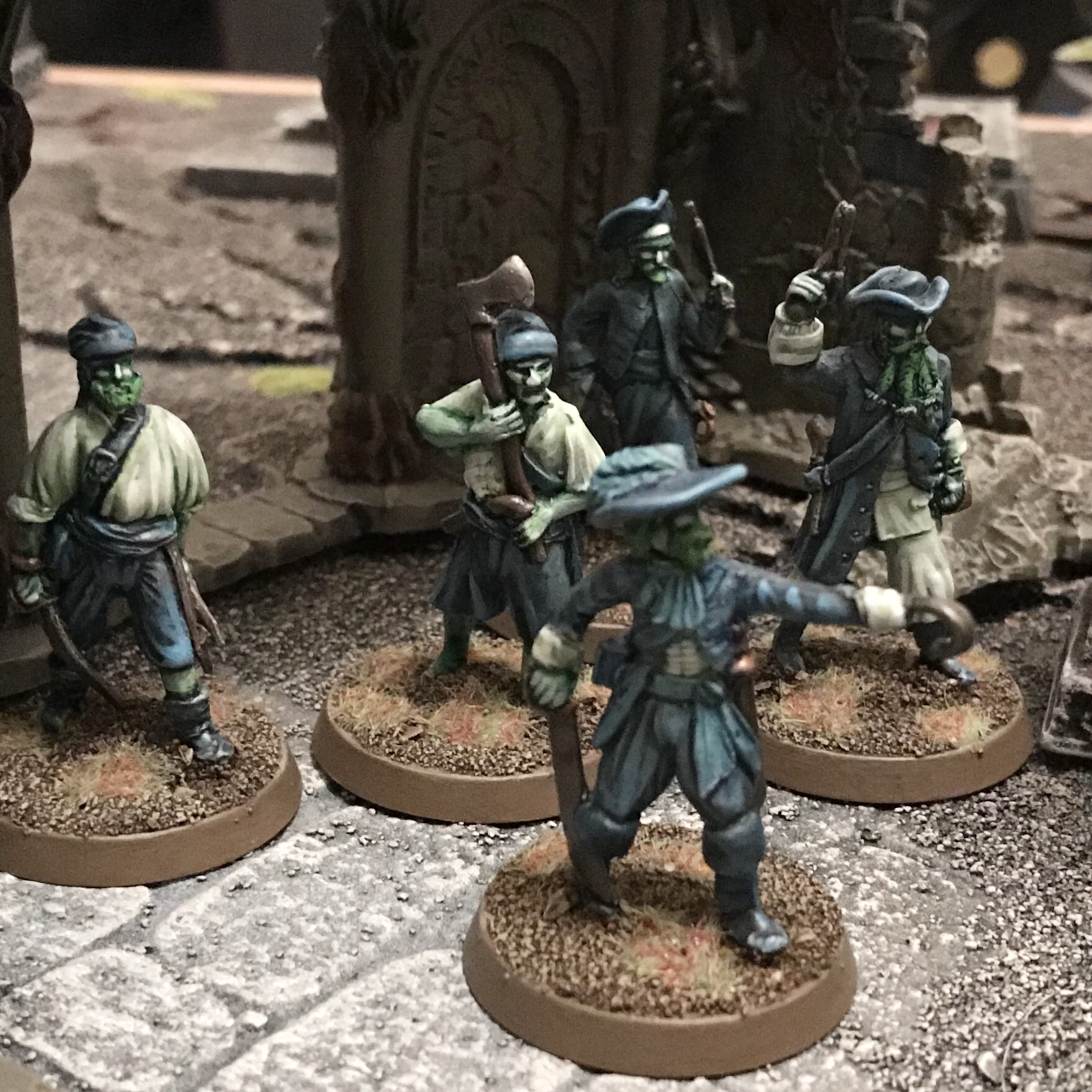
THE TURN
- First Side Moves
- Resolve Melees
- Other Side Fires
- First Side Fires
- Other Side Moves
- Resolve Melees
- Check Morale for any side that took casualties during the turn
I wanted a solid turn order that kept things chugging along without too much complication and the above fits the bill. In terms of movement I’ve always been a fan of random movement rather than fixed since it adds a decent amount of friction. At the same time I don’t like players being bogged down too much by bad movement rolls, so I implemented the following:
Move 3+D6” or Run 6+D6”. If a figure runs they cannot then shoot during their next opportunity. Charging is a run move into base to base contact.
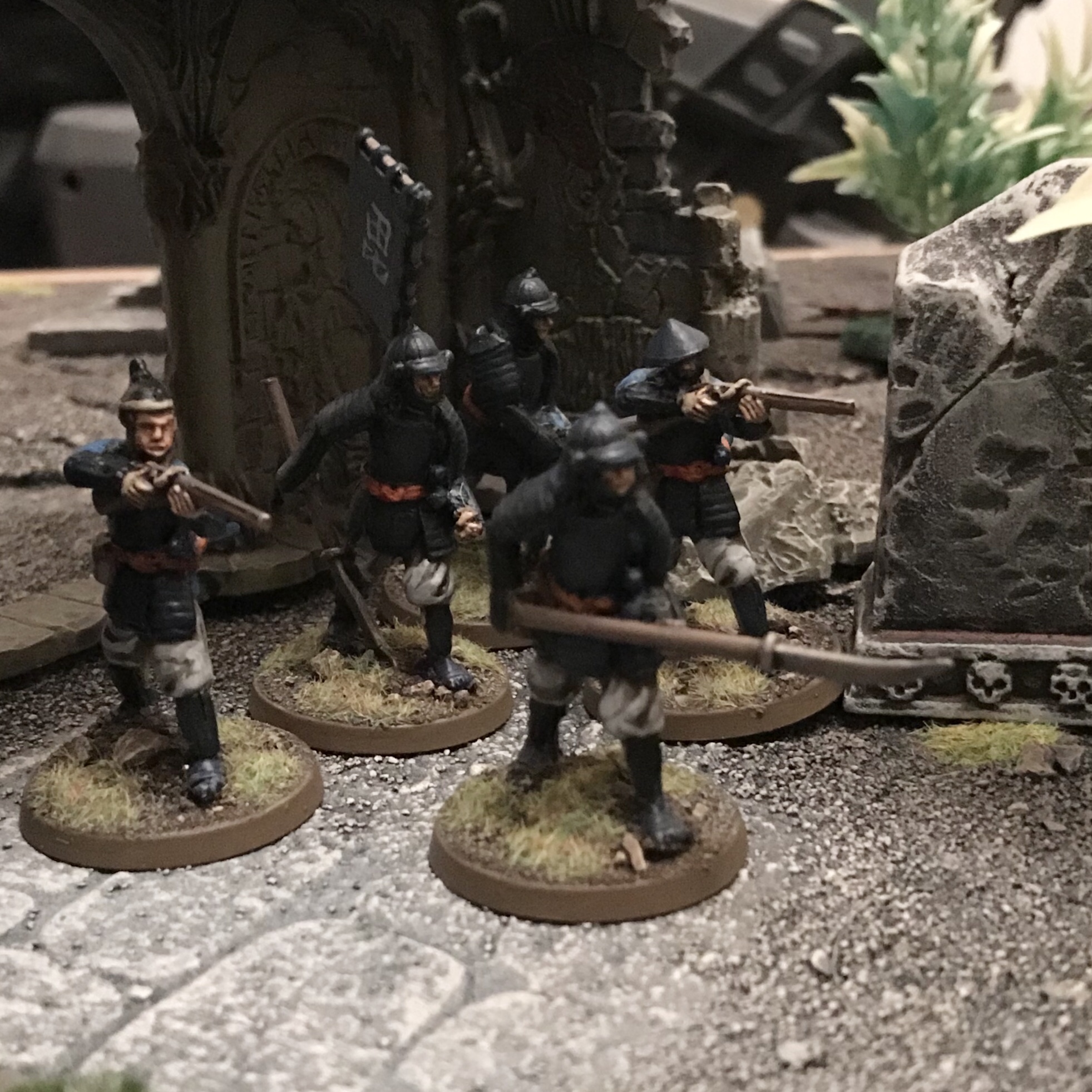
Again I tried to keep shooting nice and simple:
SHOOTING
WEAPON | SD | SHORT | MEDIUM | LONG |
Spear/ Axe | 1 | 3” | 6” | 9” |
Longbow | 2 | 6” | 12” | 18” |
Crossbow | 1 | 6” | 12” | 18” |
Flintlock Pistol | 1 | 4” | 8” | 12” |
Flintlock Musket | 1 | 6” | 12” | 18” |
Flintlock Rifle | 1 | 9” | 18” | 27” |
Revolver/Pistol | 3 | 5” | 10” | 15” |
Bolt Action rifle | 2 | 12” | 24” | 36” |
Semi-Auto Rifle | 3 | 12” | 24” | 36” |
SMG | 6 | 5” | 10” | 15” |
LMG | 6 | 12” | 24” | 36” |
Select a target/s. Measure the range and roll the number of shooting dice (SD) indicated by the table for the relevant range bracket (Longbows get two dice because their rate of fire is no doubt higher than a crossbow or musket). If shooting at a single target roll all the dice, and you score a hit on the first number. If shooting at two or more targets the total number of shooting dice must be split between targets and you hit on the second number or higher after the / in the table.
| SHORT RANGE | MEDIUM RANGE | LONG RANGE |
IN THE OPEN | 2+/3+ | 3+/4+ | 4+/5+ |
SOFT COVER | 3+/4+ | 4+/5+ | 5+/6+ |
HARD COVER | 4+/5+ | 5+/6+ | 6+/6+ |
For each hit caused the player controlling the target figure makes a saving throw – 1-3 the figure is wounded, 4-6 they are not and may carry on as normal. If the figure is carrying a shield and are being shot at by a bow, crossbow or spear/axe they can add 1 to their roll, additionally if they are wearing plate armour that covers most of their body they can add 1.
For each wound a figure receives roll a die again. On a 1 or 2 the wound is only a flesh wound and the figure suffers no effects from it. On a 3-5 the figure is wounded and loses 1 wound point. Each figure starts with 3 wound points and once reduced to 0 they are killed. On a 6 the figure is instantly killed, the shot hit them in the head, or heart etc.
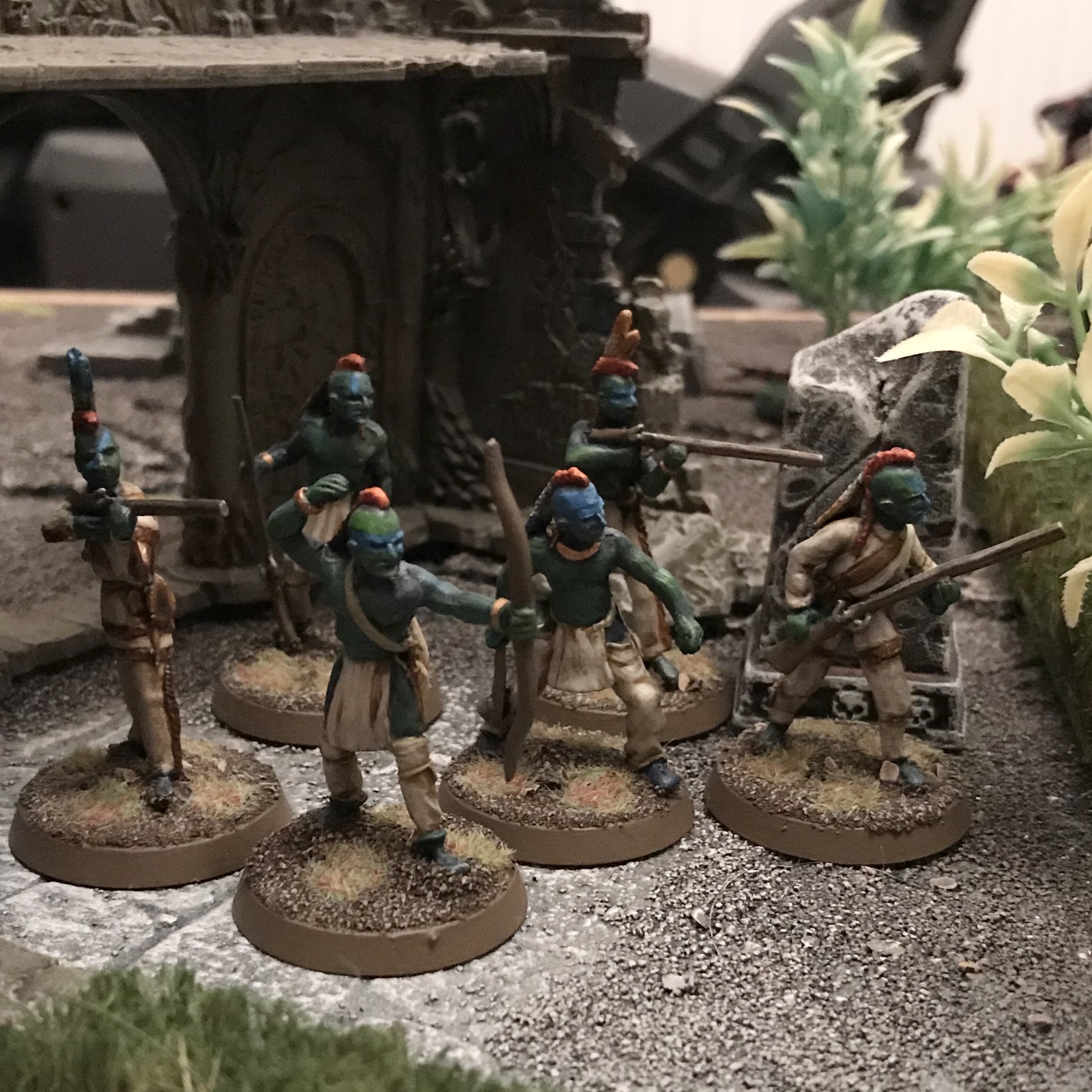
MELEE COMBAT
A charging figure, that is a figure that made a move this turn into base to base contact always strikes first. Then strike order is determined by rolling a D6 for each figure in combat and adding their weapon wield modifier and reducing by any wounds they have taken. Higher scorer going first and then working from highest to lowest, figures that tie strike simultaneously.
WEAPON | WIELD | TO HIT |
Knife | +1 | 5+ |
Spear | +3 | 4+ |
Sword | 0 | 3+ |
Axe | 0 | 3+ |
Two Handed Sword | -1 | 2+ |
Fists | +2 | 6+ |
Rifle But/Pistol Whip | 0 | 5+ |
Saving throws can be made against each hit as follows:
No Armour 6+, Light Armour (leather or padded) 5+, Chainmail 4+, Plate 3+.
A failed save results in an automatic casualty.
The morale rules are lifted straight from Featherstone, I’ve used variations on this system in most of my home brew rules:
Roll a die and multiply it by the number of remaining figures in a force. Then roll another die and multiply it by the number of casualties that side took during the turn. If the die rolled for casualties is higher the force’s morale breaks and they flee. If the die rolled from remaining figures is equal or higher than then the force carries on as normal.
My ultimate hope is that by sticking to a simpler rule set I can create more complex and interesting scenarios, and that in turn will lead to a better gaming experience rather than one where you’re so bogged down in complicated rules you don’t have the brain capacity to put a scenario on top as well.

 Deathzap
Nice- simple rules mean more games.
Cheers,
Pete.
Lovely rules. Are you being too generous with pistols or are we firmly in Pulp-Hollywood-land?
Oh, now that I’ve actually written the question down, the answer is obvious 🙂
Regards, Chris.
Yup, it’s just partly down to pulp, partly down to playability.