I play a lot of games. Most of these games are just me, playing myself, trying out rules I’ve come up with. I thought ‘Mechanics Lab’ could be a series of posts where I waffle on about those homebrew rule sets I try out.
After posting on The Simple Toy Soldier Game and thinking that I’d cracked small skirmishes with firearms. I had to consider by other great gaming passion: small skirmishes with pointy objects. Darkfell was a rule set I put together about a year and a half ago that was supposed to mimic the feeling I got reading old Mordheim battle reports in White Dwarf, because as it turns out, Mordheim is actually quite different from what my childhood mind had envisaged. Darkfell never really reached those heights for me, so after I had put together a few warbands using figures from Irregular Miniatures I mostly gave up on it.
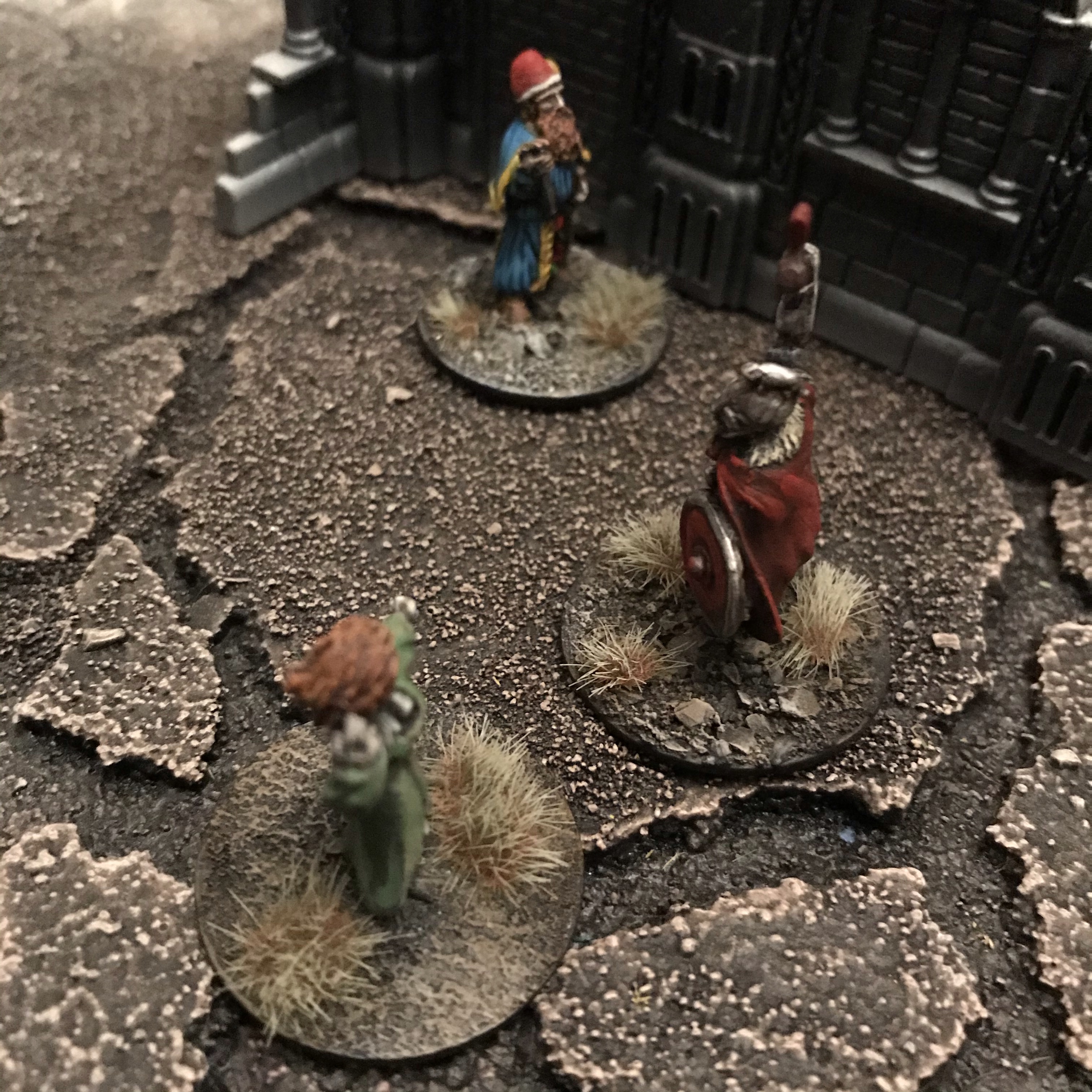
But then I recently thought of a mechanic that would keep things almost as simple as the Simple Toy Soldier Game I’m calling ‘The Wager’. Then that spurred me on to tart up those basically painted figures I put together for Darkfell. So it’s another new project I’m doing… I apologise for any ‘wordiness’ in the rules, I promise they are very simple once you get them, plus this is my first draft. Anyway here goes:
THE WAGER
Each player begins with a pool of 30 dice and a force of between 3 and 12 figures. Each figure has 5 characteristics: Speed, Range, Ranged Attack, Melee Attack and Defence. Speed can be any value between -1 and 3. Range can be any value from 1-5. Ranged Attack, Melee Attack and Defence can be any value from 2 to 6. (I haven’t though of a robust points system just yet, so just have fun statting things up!)
The game is played on a 2’x2’ board, with forces deployed on opposite sides and within 3” of the board edge. Players roll off to determine who deploys first, and then the player that deployed first takes the first turn.
At the start of any players turn other than their first they add D6 dice to their dice pool.
During a players turn they spend dice from their pool to perform wagers. They can perform two wagers per figure per turn but they must bear in mind that if at any point their dice pool is exhausted they automatically lose the game.
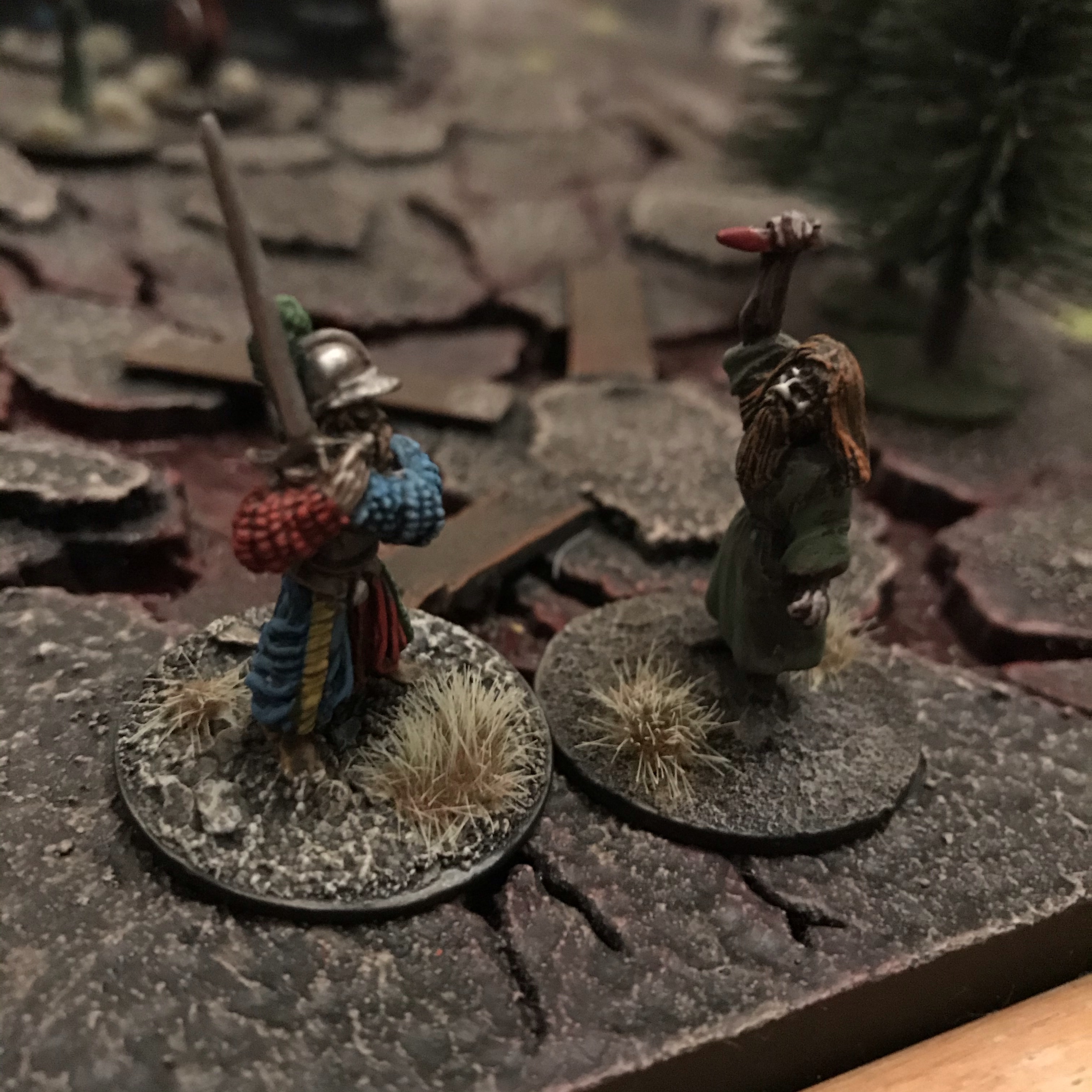
WAGERS –
Movement Wager – Wager how many inches your figure is going to move, the number declared must be 3 or larger up to a maximum of 6, even if you only want to move 1 or 2 inches you must wager at least 3. Then roll a single die from your pool. If you roll equal to or above the number declared you can return the die to your pool and move your figure up to the number of inches you declared. If you roll lower than the number you declared you still move your figure up to that distance but the die rolled is discarded. A figure’s Speed characteristic modifies the value they move after the dice have been rolled. For example a figure with speed +1 will move 4″ when I Wager 3.
Ranged Attack Wager – If your figure is armed with a ranged weapon then you can make a Ranged Attack Wager, measure the distance from your figure to their target and then wager how many dice you will roll to score a hit, you can declare up to your figure’s Range characteristic in number of dice. If the total value of all the dice rolled equals or exceeds the distance between shooter and target in inches then a hit has been achieved and you can return those dice to your pool. You can then make a Damage Wager. If the total of the dice rolled is lower than the distance then the shot has failed and all dice rolled are discarded.
Melee Attack Wager – Melee attacks operate the same as ranged attacks however no roll for distance is made, go straight to the Damage Wager. Even though you automatically hit and no dice are actually wagered declaring the melee attack still counts as one of the two wagers your figure can make this turn.
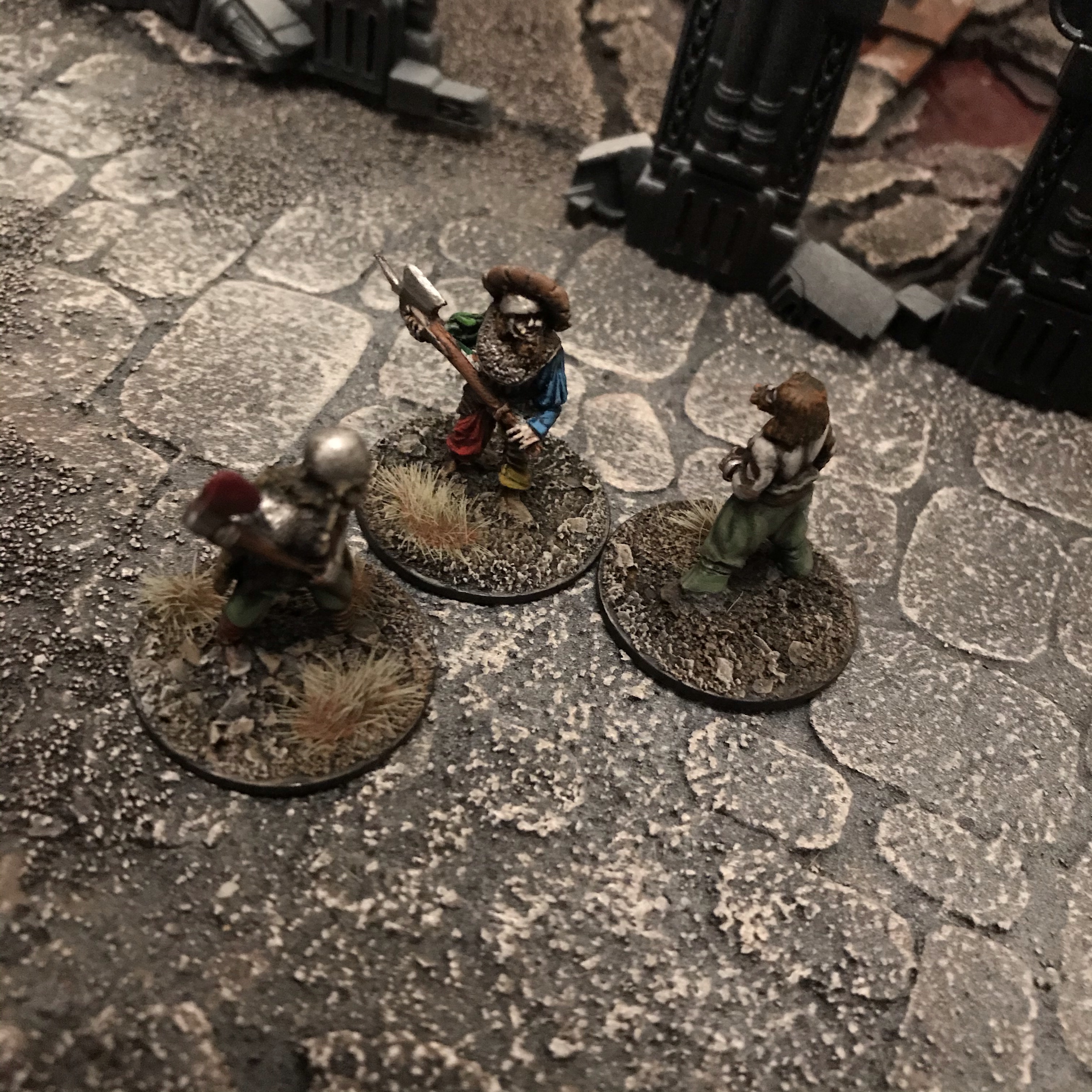
Damage Wager – A damage wager is free as it does not count as one of the two wagers your figure can make during a turn. Declare how many dice you will roll to damage the target of your attack. You cannot roll more dice than your own figure’s Melee or Ranged Attack characteristic. You opponent then declares how many dice they will roll for their figure’s defence. They cannot roll more than their figure’s Defence characteristic; unless you made a ranged attack against their figure and that figure is obscured in some way by terrain from the attacker in which case they get 1 additional dice to roll in defence for free that does not come from your pool.
Compare the results of the attackers and defenders rolls:
If the highest die rolled by the attacker exceeds the highest die rolled by the defender then the defender takes a hit.
If the second highest die rolled by the attacker exceeds the second highest die rolled by the defender then the defender takes a hit. If only a single die was rolled by the attacker then only a single hit can be scored. If only a single die was rolled by the defender then compare that single die to both the first and second highest dice rolled by the attacker.
If the defender takes a single hit from the attack then they are knocked down. If the defender takes two hits from the attack then they are killed. If the defender was already knocked down then they will be killed by a single hit.
If the attacker succeeds in either knocking down or killing the defender all the dice they rolled for the attack are returned to their dice pool and any dice rolled for the defender are discarded. If the attacker fails to either knock down or kill the defender then any dice they rolled are discarded and any dice rolled for the defender are returned to their dice pool.
Each time a figure is killed its owner discards D3 dice from their dice pool. If the figure killed is their leader then lose D6 instead.
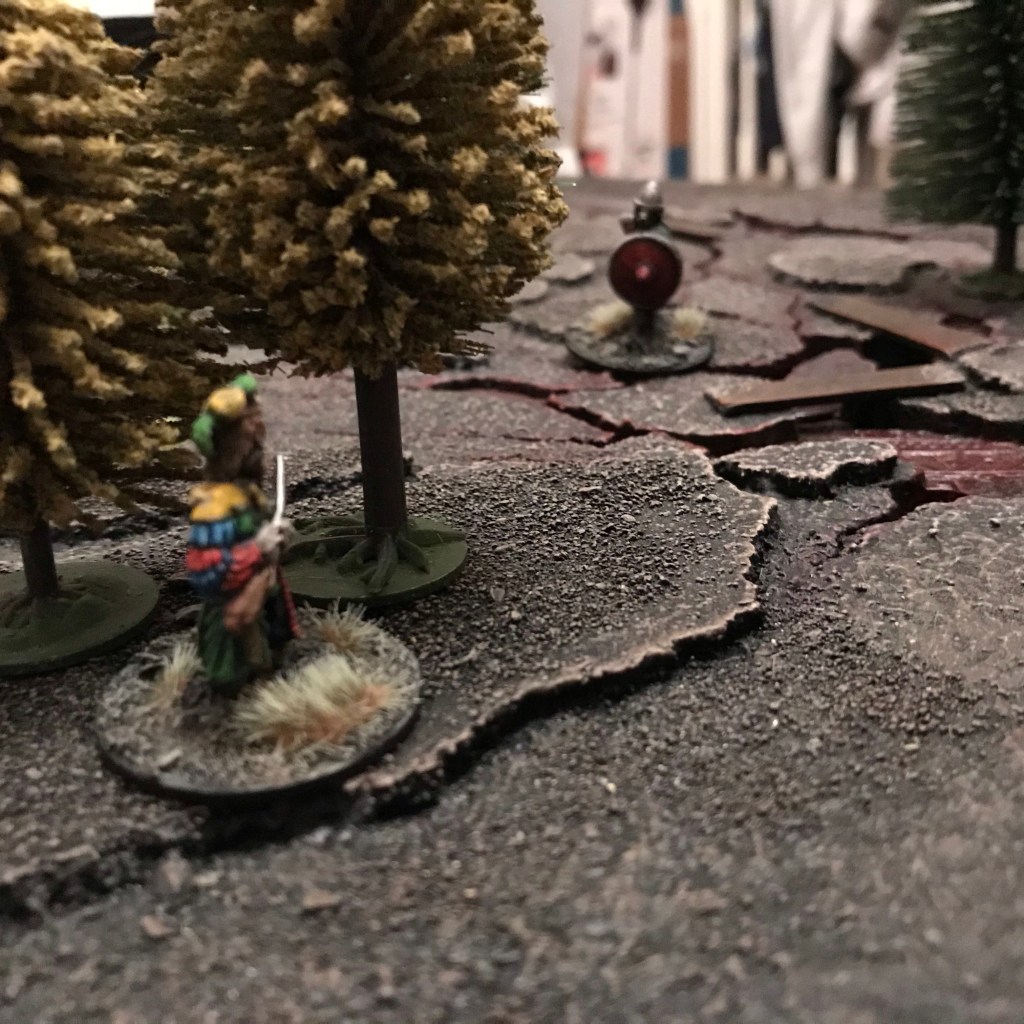
So those are the basics of the mechanics that I’ll be playing around with. I’ve already had some ideas as to how I can improve the core a little:
+1 to a figures melee attack characteristic for each other friendly figure in base to base contact with the same enemy figure.
I also want to add various points of interest – shrines etc. That add more dice to your pool if you’re holding them at the start of your turn. Or maybe boost your attacks if you’re stood within a certain range of them.
It’s also a good idea to add in some scenarios, or a scenario generator. Maybe objectives players could wager against each other – ‘I wager you 5 victory points I’ll kill your champion by the end of my 3rd turn’ etc.

 Deathzap
What an interesting mechanic. Sounds like the potential for a fun little game. We should have a go sometime
Fascinating idea! The rules sound simple enough, so if by any chance I can find 60 dice I’ll have a go this week!
Great idea- I like the idea of managing your dice pool throughtout the game- how much do you want to make that shot..?
Cheers,
Pete.
The dice mechanic is very interesting. I think it’s a good way to add player-induced tension. Looking forward to some play testing! 🙂
Like everybody else I find it interesting, I look forward to reading a play through