As the sun slowly rose over the grassy plain, two bands of armoured warriors readied themselves to draw blood, to feel steel bite through armour and flesh, and to fall into eternal obscurity or taste the immortal glory of legendary victory. Also there were paint pots nearby and some unfinished Death Guard models that I really should be getting on with.
I’ve had two things lodged in my grey matter for a while. Skirmish games with very few miniatures, say 1-3 per side at most, and games that require almost no set up and packing away. The kind of games I can play on my desk immediately after finishing painting some figures with zero preparation in terms of terrain or scenarios. What I came up with was a combination of mechanics from my Wager system, Tiny Wars and the Simple Toy Soldier Game.
Each player begins with a pool of 30 dice (or just write how many dice you would have on a piece of paper) and a force of 1-3 figures. Each figure has 3 characteristics: Speed, Combat and Defence. The total of all of the values of a figure is the figure’s points cost. You have 300 points to build your force. Each figure also has a class – Fighter, Thrower or Shooter.
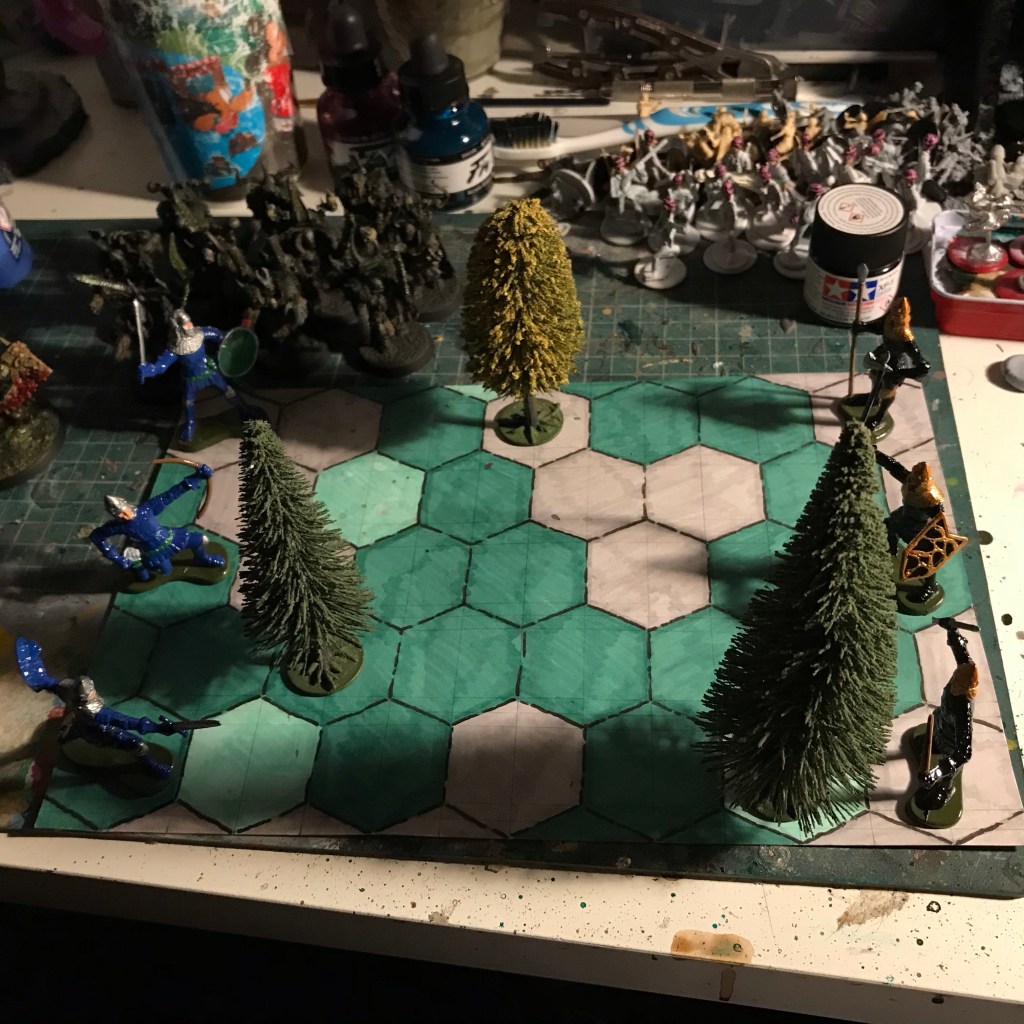
The game is played on a hex board. Mine is currently an A4 piece of card with the hexes draw on. Giving a 7×5 hex grid. No reason you couldn’t play on a normal square grid I suppose.
Figures activate in speed order from fastest to slowest. If two or more figures have the same score then their order once they are reached in the turn is randomly determined. Once all figures have activated each player adds 2D6 dice back into their pools and play starts again going from fastest to slowest, keep playing in this manner until the game ends.
When a figure activates the player takes 1-6 dice from their pool and declares a number between 1 and 6, they then roll the dice. Each score of 3+ determines the number of action points the figure activating gets for their activation. If the player declared a number that is equal to or below the number of action points they scored then they can keep a number of dice up to the value they declared and return them to their pool the rest are discarded. If they declared a higher number than they scored then all the dice are discarded.
The figure now activates –
MOVING
You can spend 1 of the figures action points to move the figure 1 hex. Your figure cannot enter a hex that contains another figure or that is blocked by a terrain item.
ATTACKING
You can spend 1 of the figure’s action points to have it make an attack.
If the attacking figure is a shooter they can declare an attack against the closest enemy figure, or the closest enemy figure not in an adjacent hexagon with a friendly figure, or the closest enemy figure that is not obscured by any piece of terrain.
If the attacker is a duellist then they can declare an attack against the closest enemy figure, or the closest enemy figure not in an adjacent hexagon with a friendly figure, or the closest enemy figure that is not obscured by any piece of terrain. The declared figure must also be within 3 hexes.
If the attacking figure is a fighter they can declare an attack against any enemy figure in an adjacent hex.
Roll 1 die for the attack. The base value you need to score a hit is as follows:
If the attacker’s combat value is double or more than double than the defender’s defence value then you only need to roll a 2 or higher to cause a hit.
If the attacker’s combat value is greater but not double then you need a 3 or higher.
If the attacker’s combat value is equal you need a 4 or higher.
If the attacker’s combat value is lower but more than half of the defender’s defence then you need 5 or higher.
If the attacker’s combat value is half or less than half of the defender’s defence then you need 6 or higher.
You add 1 to the die roll if the figure attacking is a fighter, and you reduce the die roll by 1 if the attacking figure is a shooter. In either case if you roll a 1 you always fail, and if you roll a 6 you always succeed.
Each hit scored reduces the defender’s dice pool by 1, and puts 1 danger point on the defending figure.
PROTECTING
For 1 action point you can remove 1 danger token from the activating figure.
FINISHING ACTIVATIONS
Once all of a figure’s Action Points are used its activation is over. If the figure has any remaining danger tokens on it roll a die, if the result is equal to or lower than the number of remaining danger tokens then the figure is killed. Remove them from play and the owning player loses a further D6 dice from their pool. If the result is higher then the figure survives and all remaining danger tokens are removed.
WINNING THE GAME
The game ends when one side has exhausted its die pool or lost all of its figures. In either case the other side wins.
I think what I have there is a solid core that could be easily built upon, and should lead to some fun and fast skirmishing. I especially like the fact that the stats are easily increasable without breaking the game or the dice, it leaves lots of room for RPG style progression and campaigns, or a series of tournaments. I think the game would also be good for Gladiatorial Contests in Ancient Rome or maybe the far flung future.
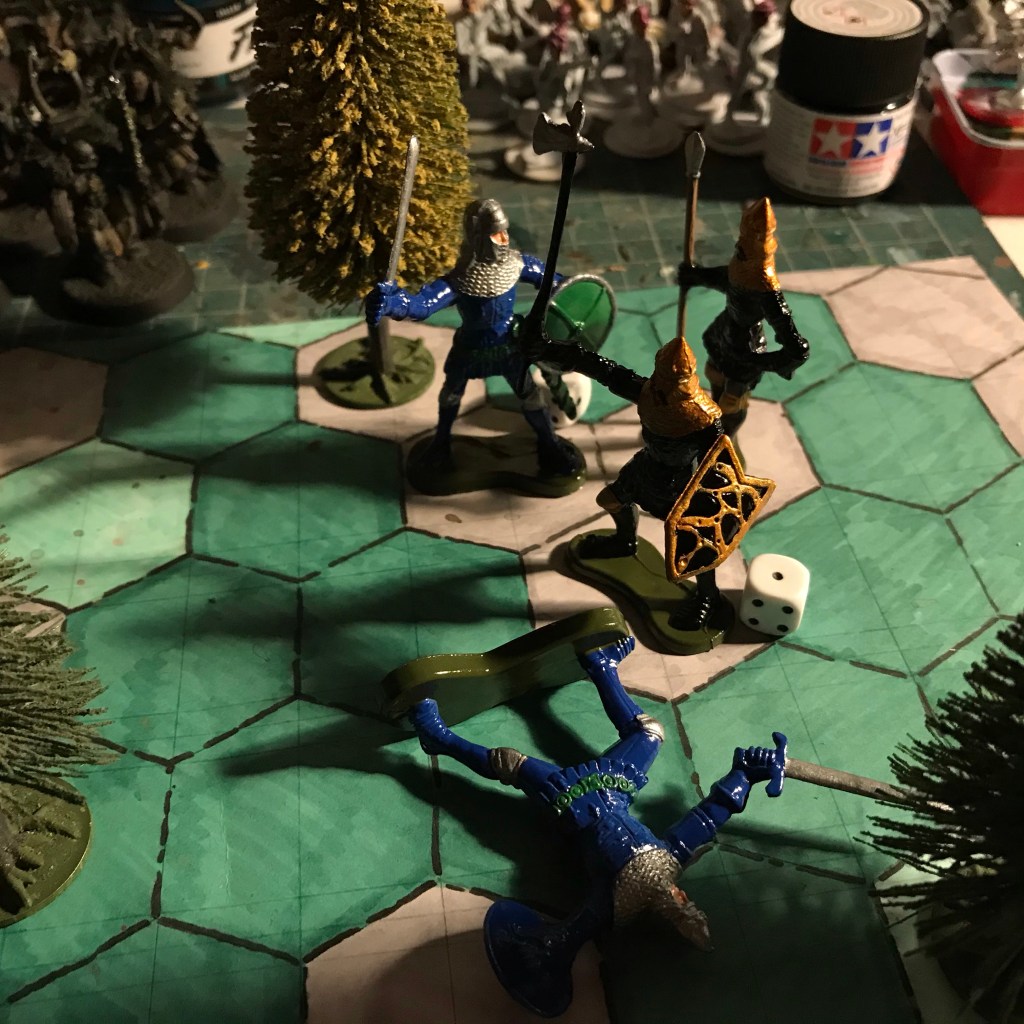
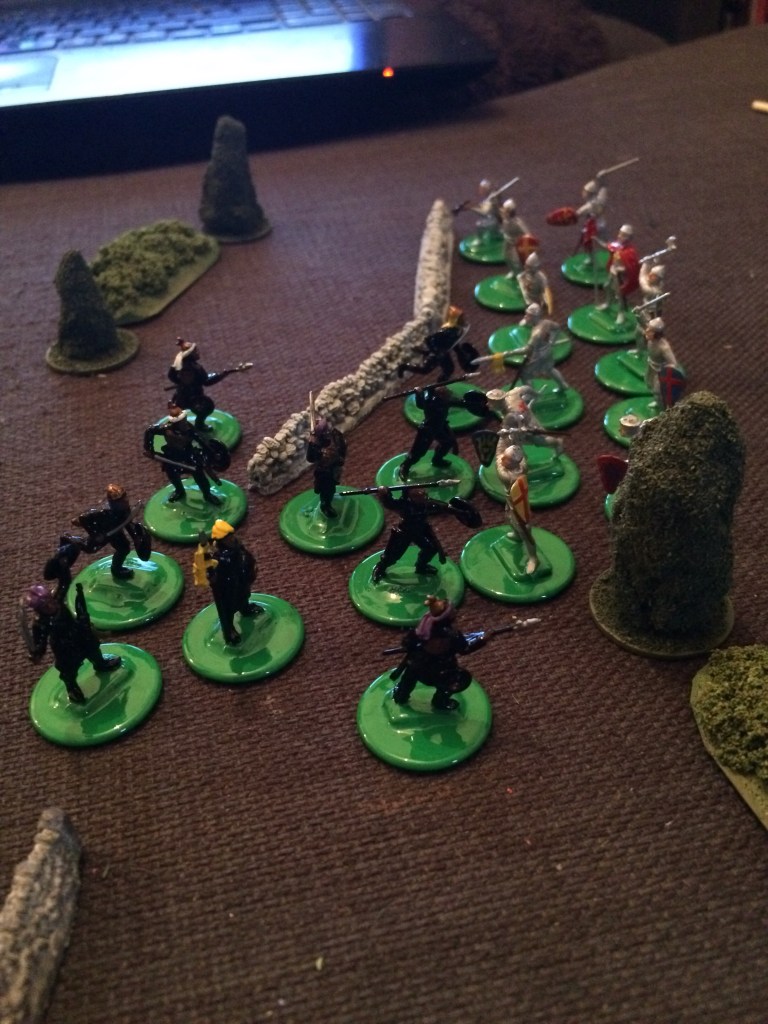
The figures you may notice are rather simply painted. This is an attempt by me again to cope Britain’s Knights of the Sword toy line, something which I obsessed over in my childhood, and something which I wish I hadn’t lost over the years. I seriously have no idea where my Knights went, I suspect they were thrown out by my parents or donated to a charity shop, parents often don’t understand how important these things will become. Although I probably foolishly said I no longer needed them as I had a Playstation or something equally silly.
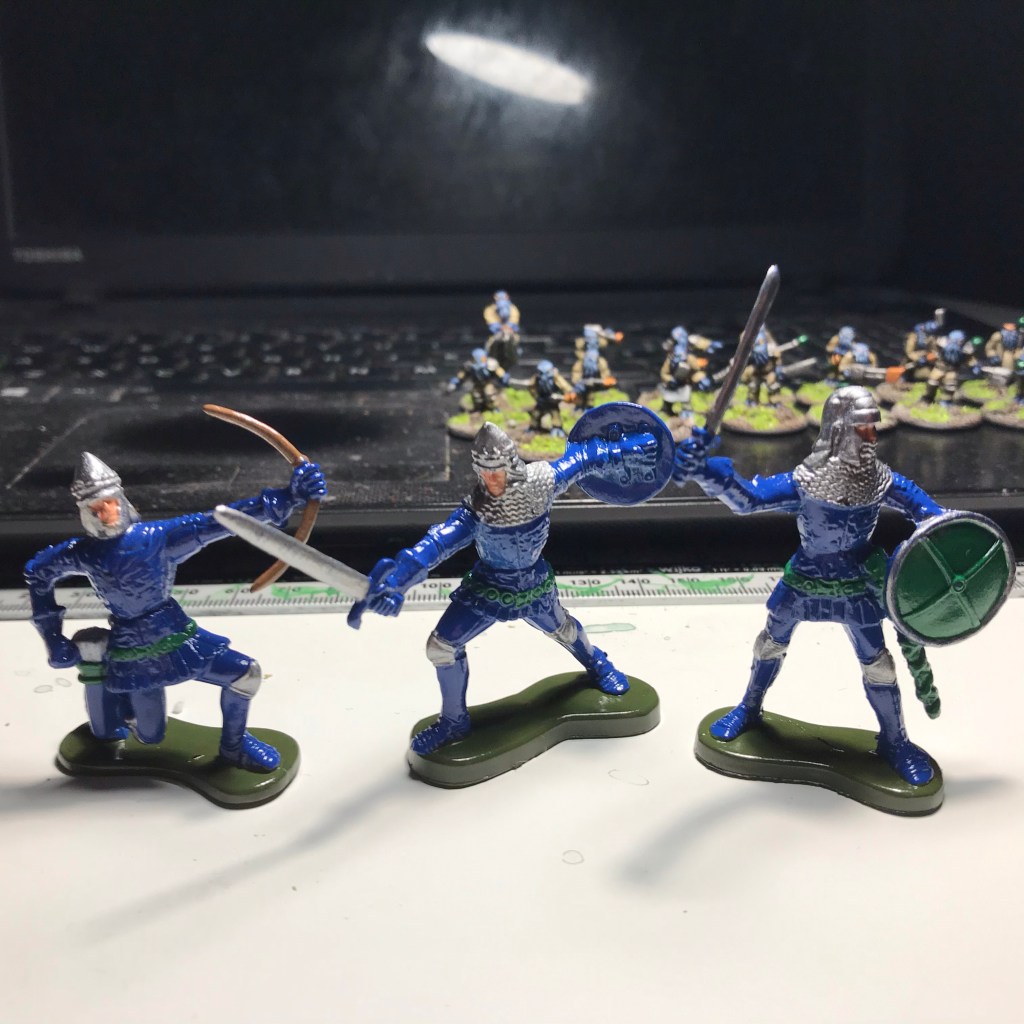
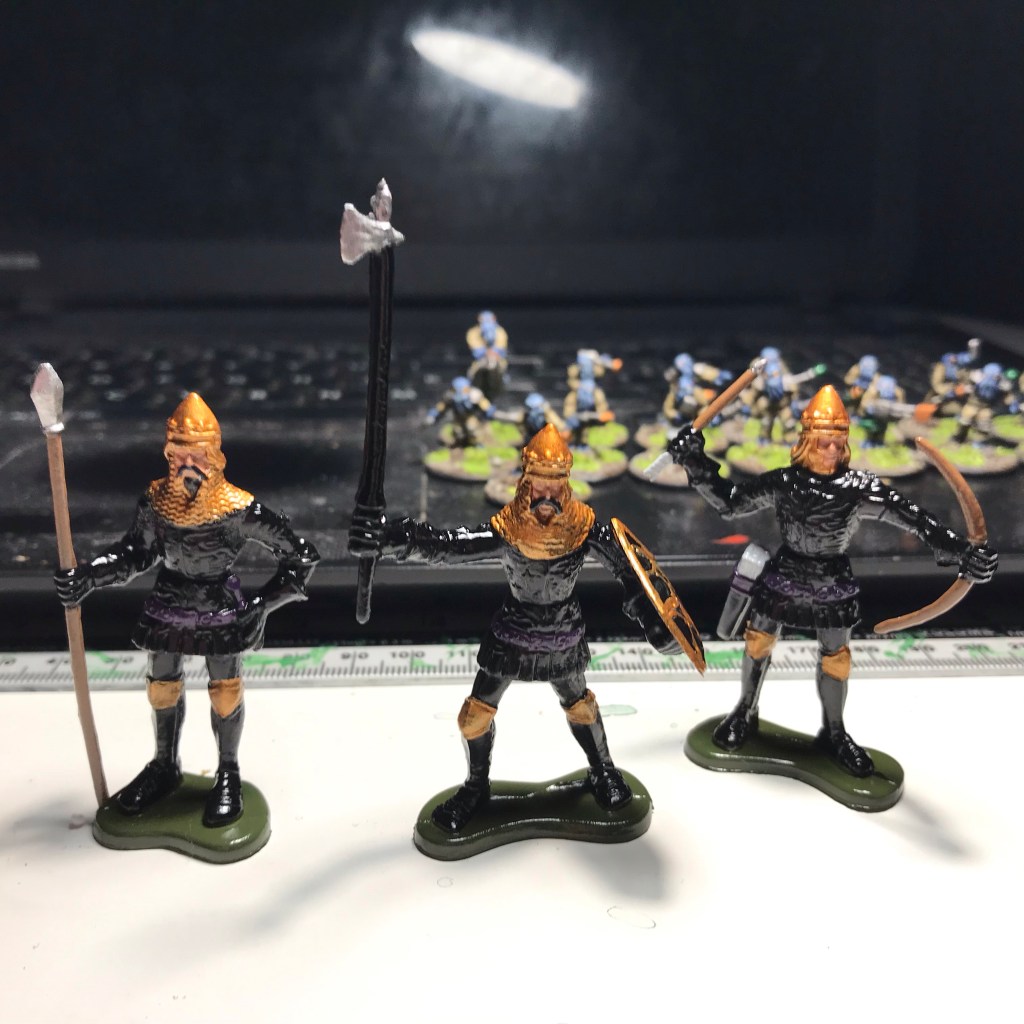
It’s a style I’ve attempted before on some 1/72 Italeri figures, to I think at least great effect.

 Deathzap