I was surprised at the challenges that arose when I set out to paint up a few boxes of 1/72 figures as ghosts.
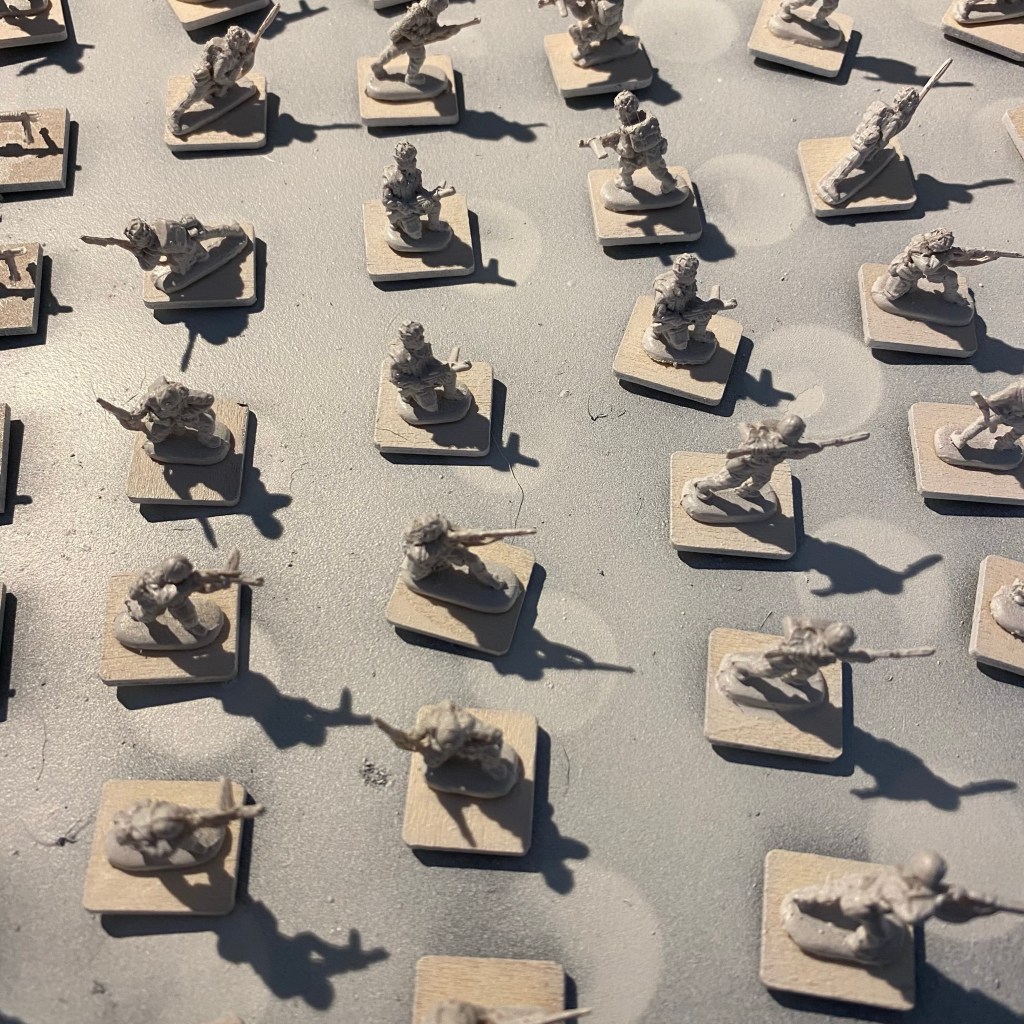
Getting those pesky little guys (1/72) onto the table has always been a challenge. 1/72 figures are as detailed as their 28mm brethren, just smaller. The nightmare of realistically painting a bunch of Napoleonics in this scale keeps up up most nights, but sadly, the figures available are great (and dead cheap) and really deserve more love than you often see especially in wargaming spaces. Ghostly painting and Ghost Legions was thought up to solve these problems.

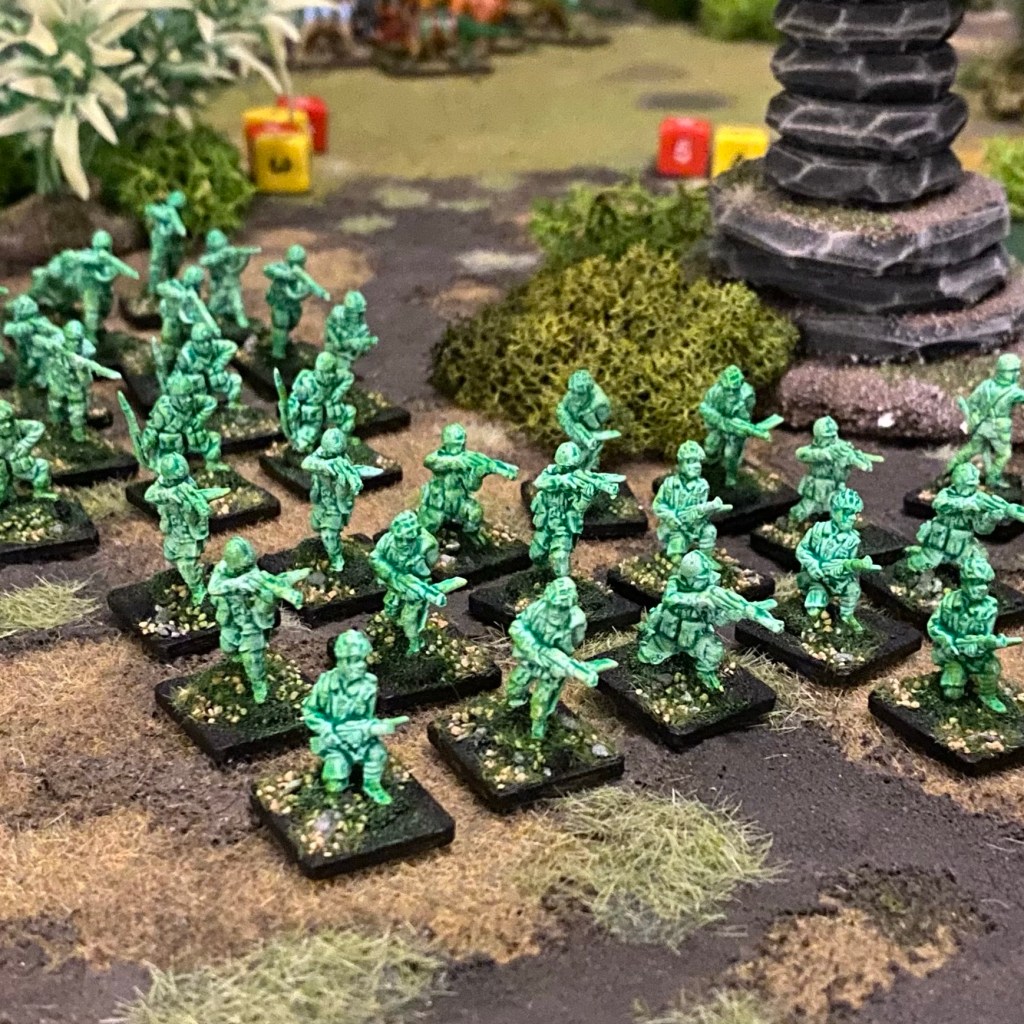
I know a ghost could be any colour, but for some reason I do find blues, greens and purples more ‘realistic’, basically all the cold colours. That does limit your schemes somewhat, and all told once they’re done, they don’t feel ‘done’ in the same way.
I suppose it’s that feeling of ‘done’ that causes some to scoff at entirely ghost based armies for Warhammer 40k or Age of Sigmar. Not Lord of the Rings though, but that one does blur the lines of fantasy and historical a bit, things are a little more set in stone with that one.

There is an issue with readability on the tabletop, picking out who has what weapon at a distance can be difficult.
With prior iterations of Ghost Legions I have picked out the weapons or important features in a different colour but I do think you lose that ‘ghost’ look:

I’m considering painting the skin and any bright metal bits white and then darkening the weapons with a basic wash, but I’m equally reluctant as much more painting stops my problem of quick and easy painting being solved, replicating even a basic few second step 50ish times can add a lot to a painting project.
My desire to keep costs down by allowing you to play with one box of figures also limits the look of any force, which is amplified again by the simplicity of the paint scheme. I suppose I’m just used to the appeal of a 40k army with its various units and their different sizes. It would be a lot of fun to see the Japanese backed up by a haunted tank, the Bazouks by cavalry and cannons, or maybe spookier things? This is the afterlife after all.

So lots still to mull over in this project, and I’m having fun mulling, which is the end goal of any hobby surely.
One thing to mull is how the afterlife works in this setting. What are the ghosts fighting for? Originally I had imagined the various death gods of different mythologies would wage war on each other using the souls of the dead as troops, which is a fun idea. I had also envisaged this happening in the underworld, but I also like the idea of this happening in the normal world so I can populate the table with normal things, even a train layout. Who knows what goes on outside the realms of normal human perception?
I suppose you could play a game just pitting one historical force against another, but if you lean into the ghost idea do you allow for rapid redeployment/ teleportation, can forces be drawn up to a heaven like place for finishing their unfinished business or be dragged into Hell after a demon outbreak?

 Deathzap
Interesting thoughts but I must admit those with bits (shields, weapons etc) painted darker do seem to look better 🙂 (going purely by the photos)