You’ll have to excuse my rather 20th century looking terrain in the following images, as it doesn’t match the historical battlefields these guys would have fought on. However, for those in the know, soon this army will be going up against US Vietnam War troops, WW1 British Camel Corps, even some sci-fi Space Soldiers, so the terrain at least works in that respect.
This army is entirely made of HaT figures. The two boxes they produce for Sumerians are so far (at least as far as I could find), the only boxes of 1/72 Sumerians on the market.
The figures to my mind are more than good enough, though generally speaking HaT figures aren’t often the best ones available. The price is right though, 96 figures or 3 chariots for roughly £10 depending on where you get them from.
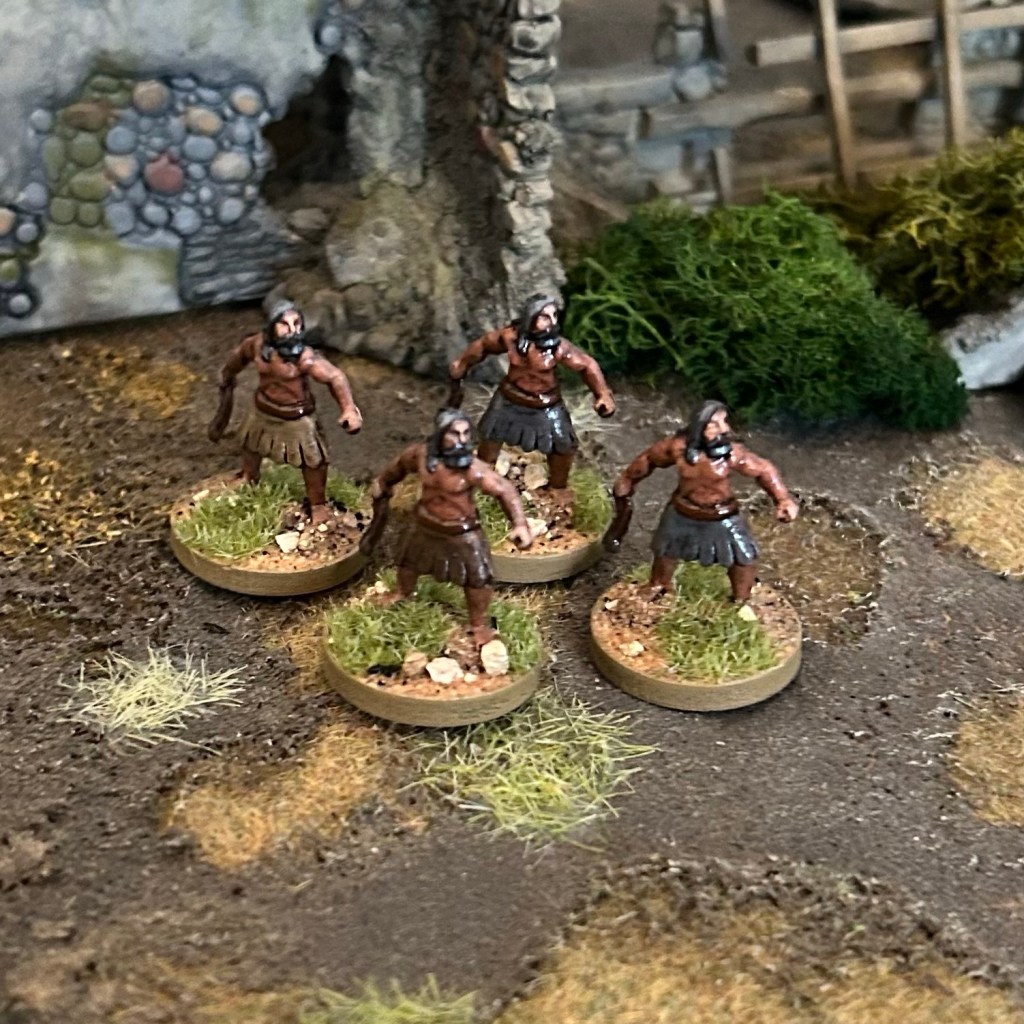
To begin rather humbly, some slingers, there’s 4 in the box:
And now some ‘Nim Skirmishers’:
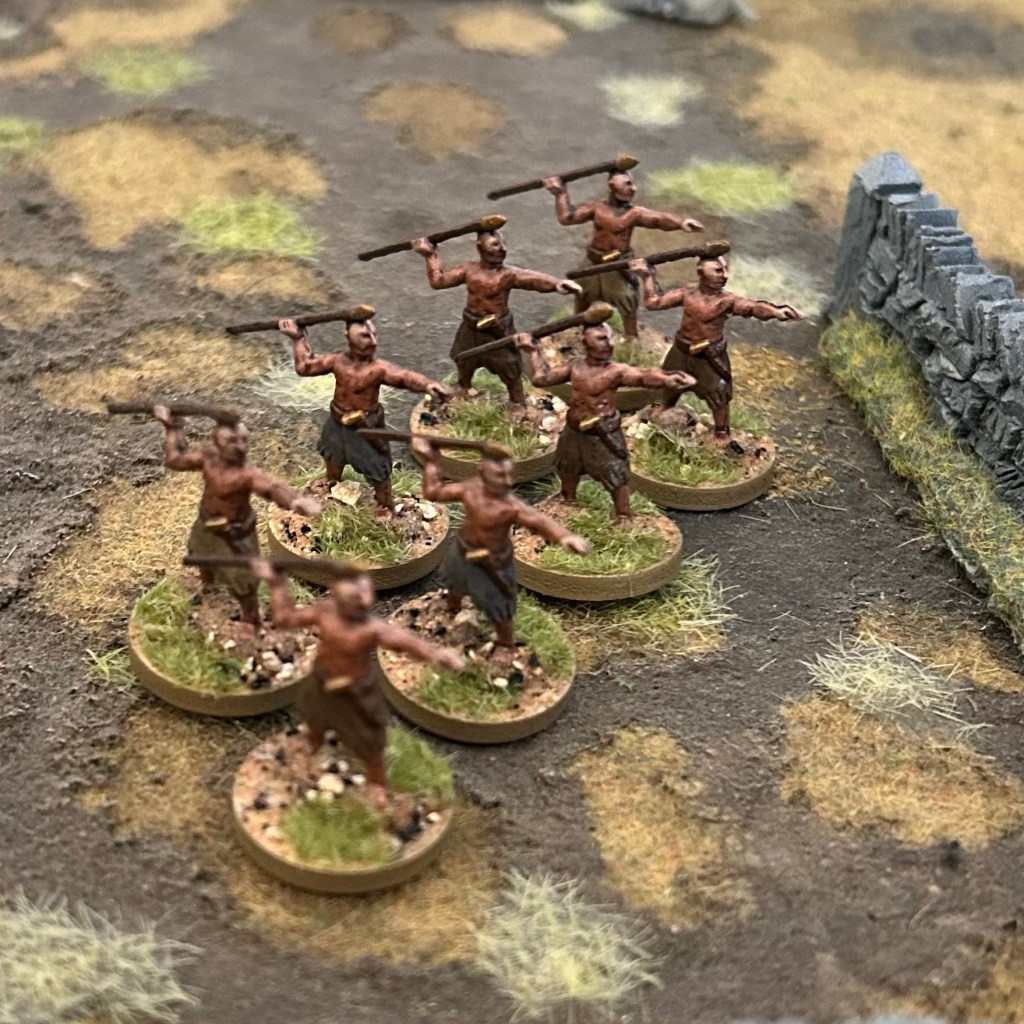
I’ve kept painting basic on these guys, sticking to base coat, wash, and then only highlighting faces and hands. It’s what I’ve done with all my 1/72 figures and I think it gives a good effect without taking too much time.
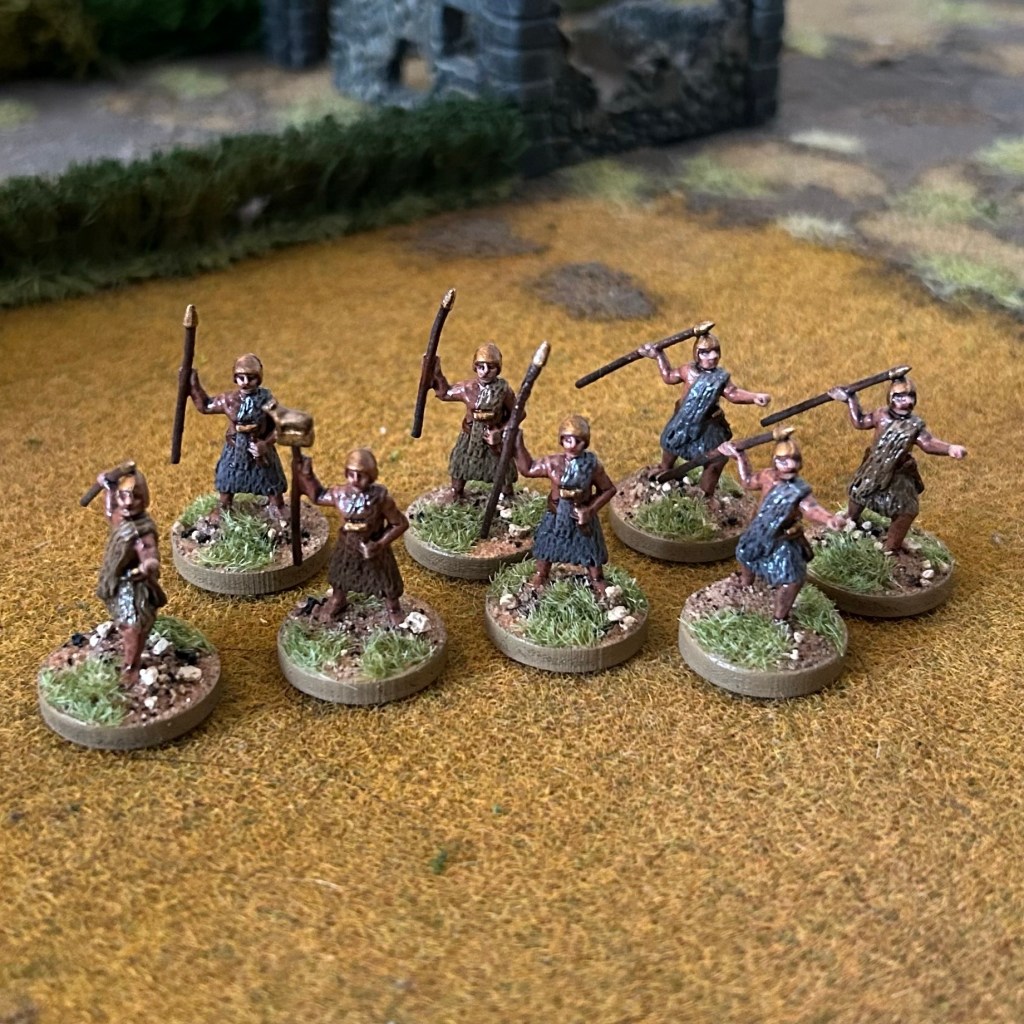
‘Gutian Warriors’:
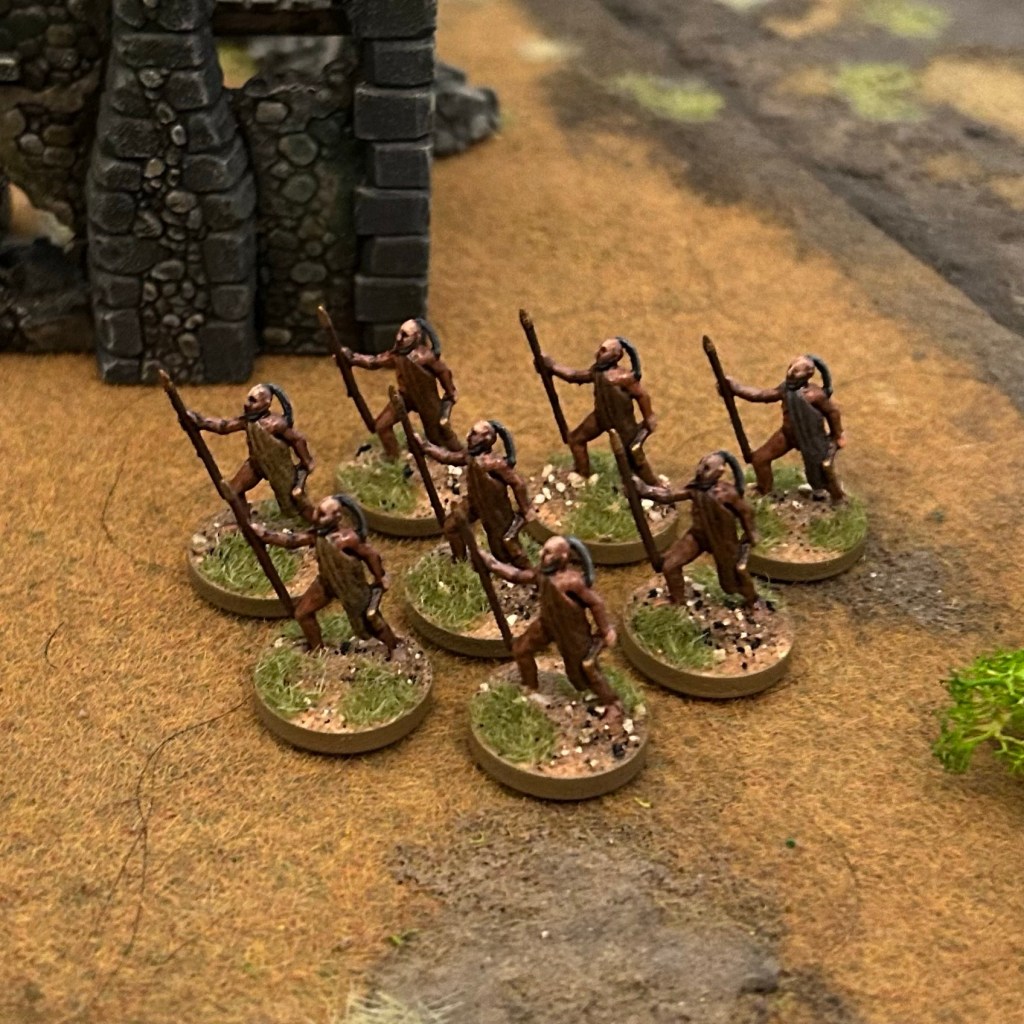
It must be said that when it comes to ancient Sumeria, there really isn’t all that much evidence to go on, so much of this set is educated guesswork.
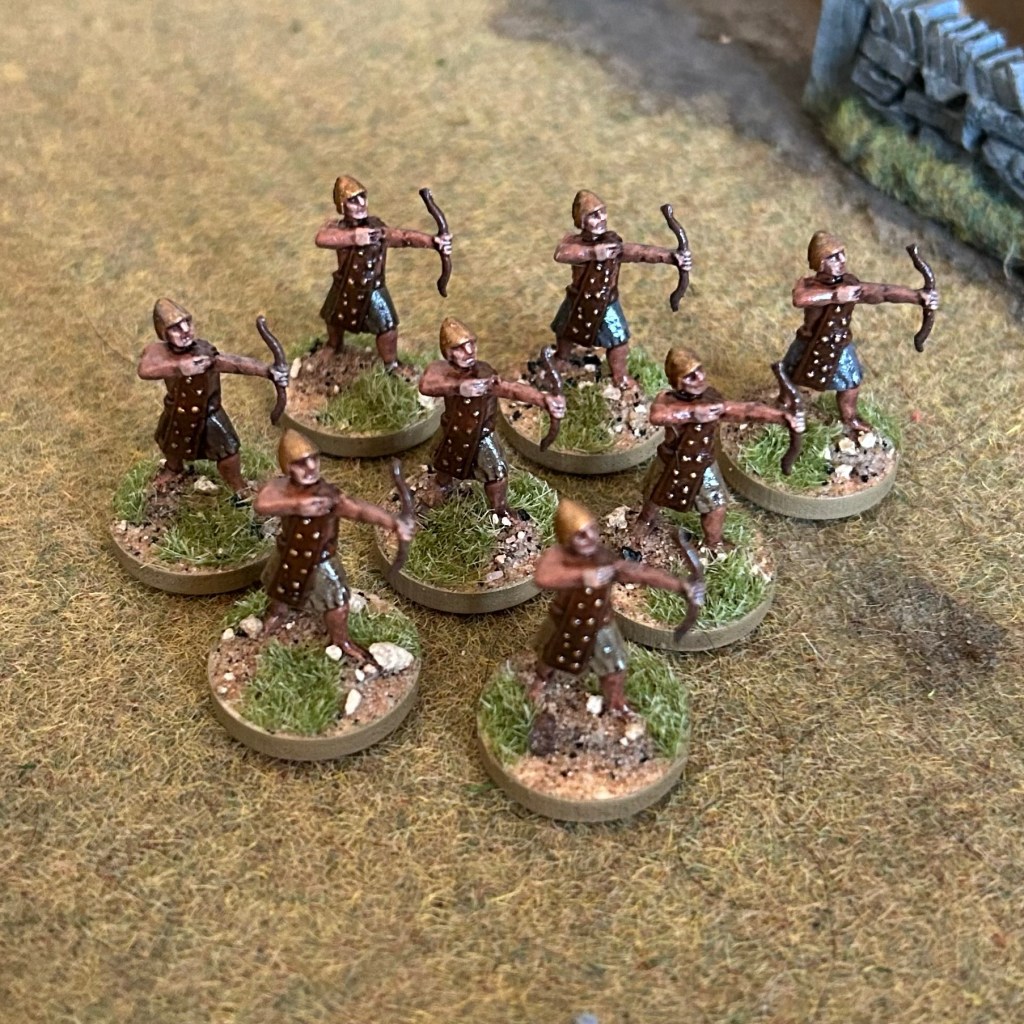
Archers:
Shield bearers, spearmen, royal guard and a chariot:
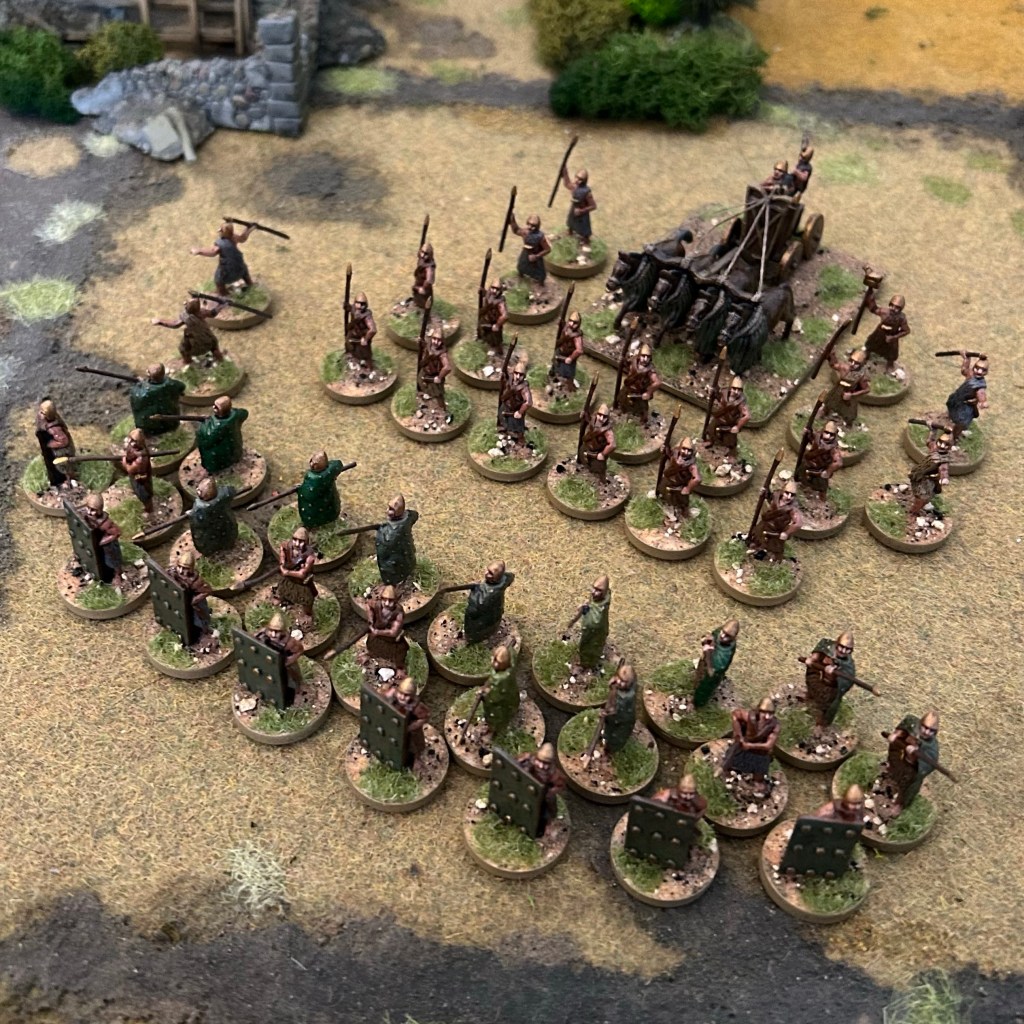
It’s the Stele of the Vultures that depicts Sumerians in action. It’s where we get the big two handed shields and ranks of spearmen behind, that you see Sumerians depicted with so often. However, after watching a documentary on Sumerians, I found out that now historians think the depiction of the large shields with nine bosses on, could be an artistic interpretation of many smaller shields. So we might not be on track here. However at least for now I’ll stick with the typical wargaming interpretation of Sumerians. It does at least give an interesting way for them to fight, compared to other ancient or medieval forces.
The other thing that made the historian on the documentary I watched raise an eyebrow, were the typically depicted studded cloaks:
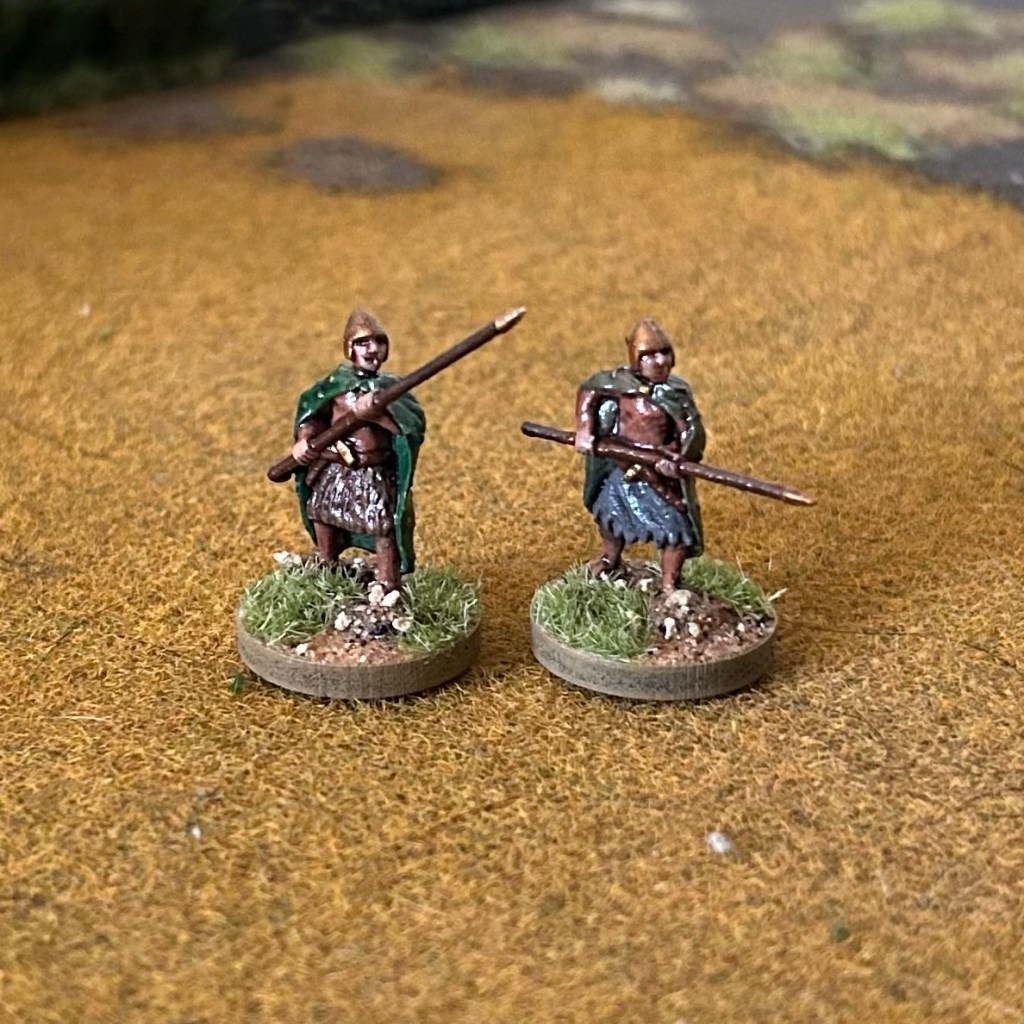
Presumably if they were studded with bronze, and made of a suitably heavy material like leather, any protection they might provide could also be outweighed by how much they would limit your movement and sap your energy.
I wondered if the apparent method in the madness (if this is indeed what they did), was have the studded cloaks protect the sides and the rear of a unit, while the giant shields protected their open fronts. Though I’m not sure how effective a heavy studded cloak would be at protecting your sides from skirmishers with javelins or slingers?
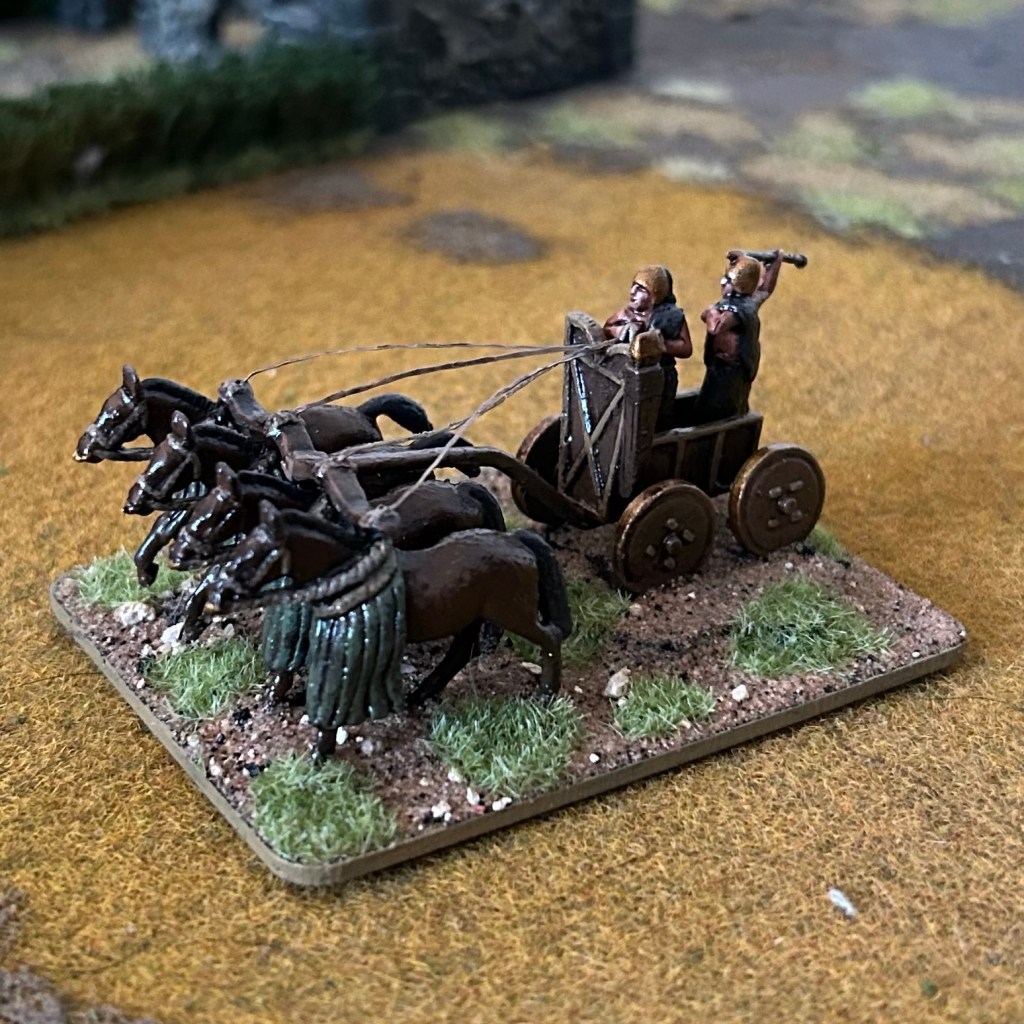
I enjoyed putting the chariot together, but it wasn’t without its problems. It’s the same rubbery plastic of the figures, so the parts can be a little annoying to say the least to put together. I’d rather put it together before painting, so I don’t get glue all over my paint job, however, if (as I found) you put it together before painting, getting to parts of those horses with a brush is nigh on impossible.
The other fun aspect of the chariot is that the car (is that what you call that bit?) seems to sit high once glued to the horses, and won’t rest flat on the ground. So you need to out something underneath it on the base. I went with a torn off bit of cork placemat, which worked well.
The four ropes running from the horses back to the driver are not modelled and you do have to make them yourself. My ingenious solution (if you don’t mind me saying), was to use scrim tape. The stuff I have is made of long solid strands with the cross pieces woven perpendicular around them. So if you cut a length, you can actually slide the cross pieces off with your fingers, and your left with a rather useful length of fibre glass I believe, which despite being the thickness of scale rope, is definitely not going to break.
Interestingly I learned that Sumerian chariots weren’t really chariots as we might imagine them. They didn’t have access to horses, these animals are more likely ponies, and looking at the wheels, the chariots were likely to be extremely heavy. It seems they behaved more like mobile command platforms, than shock attack units.
Anywho, here’s some shield bearers and spearmen up close:
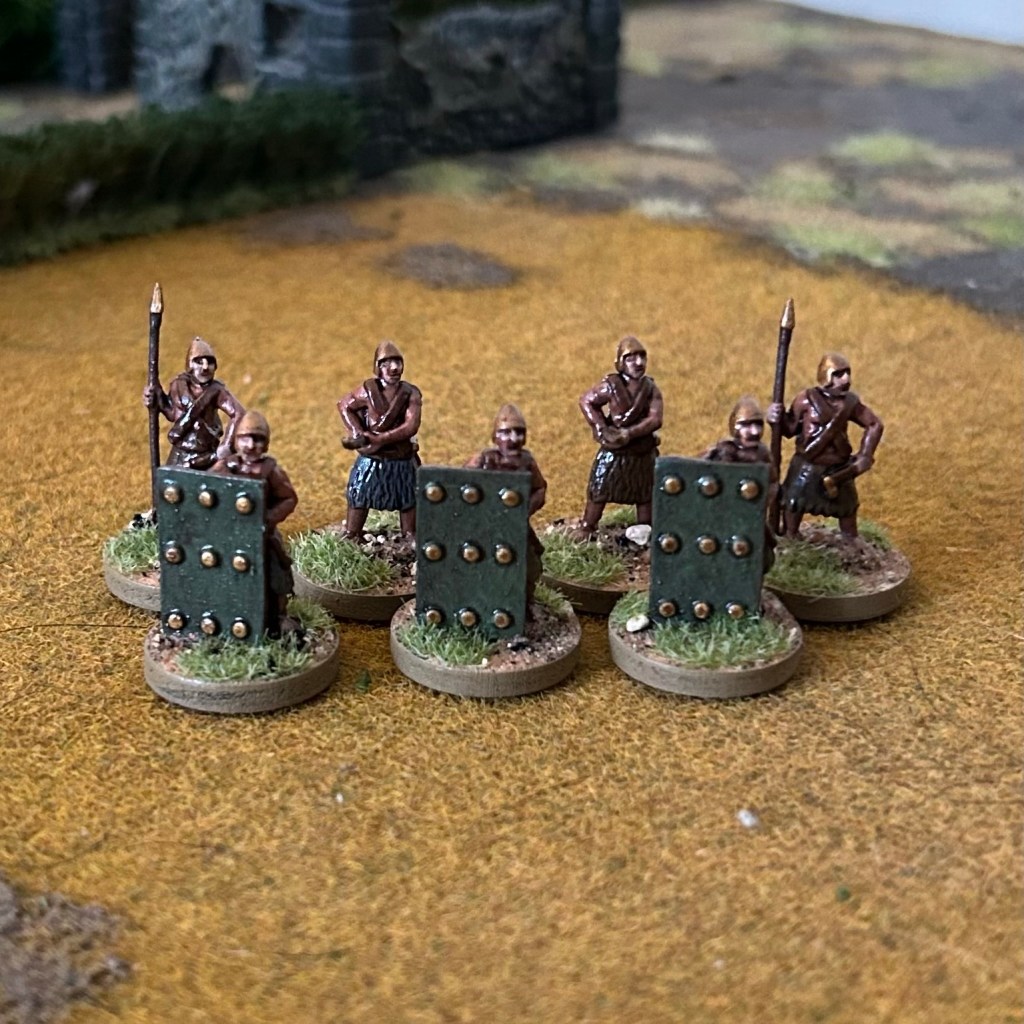
The main weapon of the Sumerians (besides the obvious spears) appears to be an axe, or throwing stick (historians vary) hung at their belts. I painted mine as axes because I thought it was cooler. Though they could be throwing axes to get the best of both worlds.
Maybe as the phalanx pushed forwards, some men in the ranks hurl their sticks/axes over the shield wall in an attempt to break up the enemy.
The final group in the box of infantry are the Royal Guard:
I can’t say I’d recommend painting a full batch of 72 figures (yes I’ve still got some left over in the box), and a chariot in one go. It’s a bit draining, but the feeling of having all that done now is a nice one.
I think I may have gone a little heavy on the green with these guys, of course no one really knows how they might have looked, but that’s just where my gut is. Though if I make another big group of them using a different colour, with a similarly coloured chariot it will be a nice way to keep track of who is in command of who.
So, on to the Camel Corps!


