I wrote somewhat briefly about the chief problem with Tanks in my (now long ago) post The Trouble With Tanks. Which was largely about attempting WW2 wargaming utilising Grimdark Future.
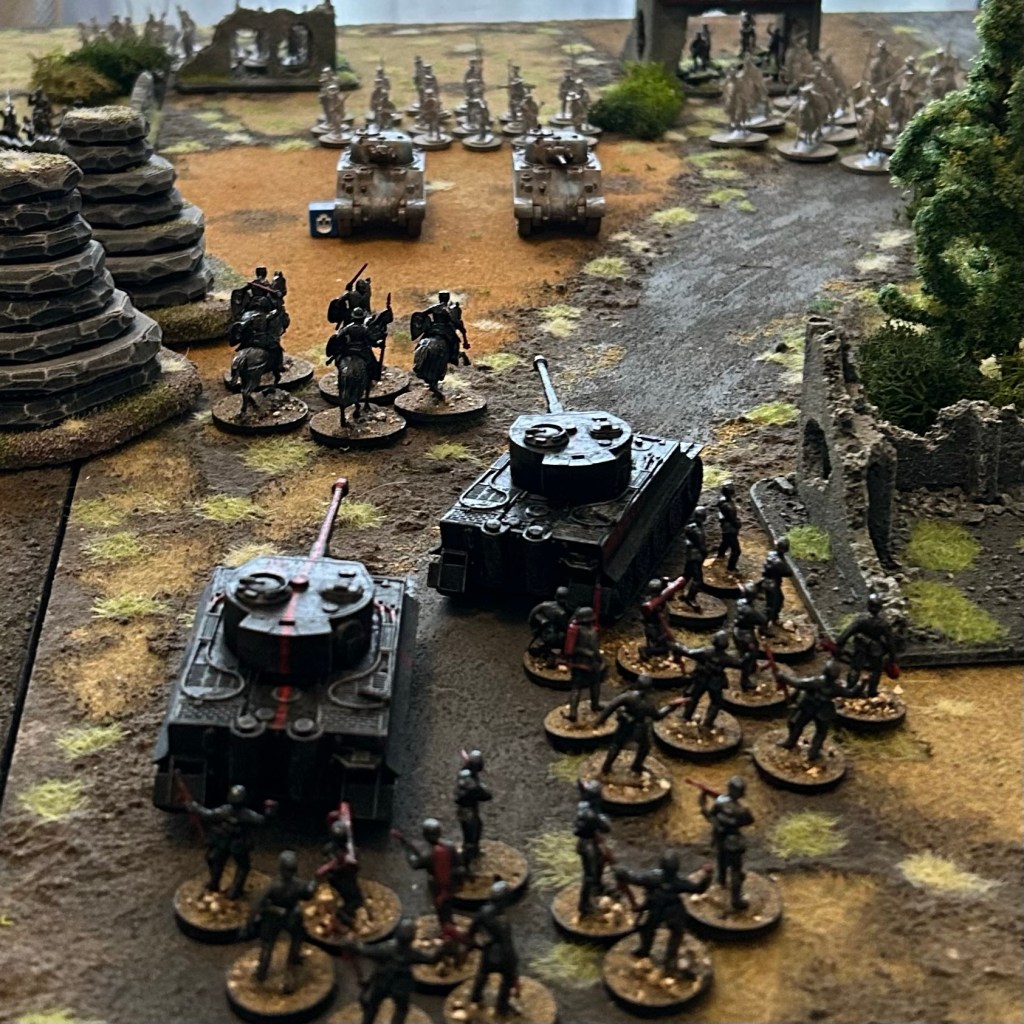
The TLDR, is that tanks can’t be harmed by certain weapons. So assigning a points value to a tank depends on your opponent’s ability to knock a tank out.
In various sci-fi rulesets where weapons are pure fantasy, often the problem is fixed by allowing any weapon to do damage to a tank, though obviously specific anti-tank weapons fare far better. This is the current solution Warhammer use in 40k. Gone are the days of armour values and vehicle damage tables. A tank is just a tough single model unit, not really that different from a big monster or hero.
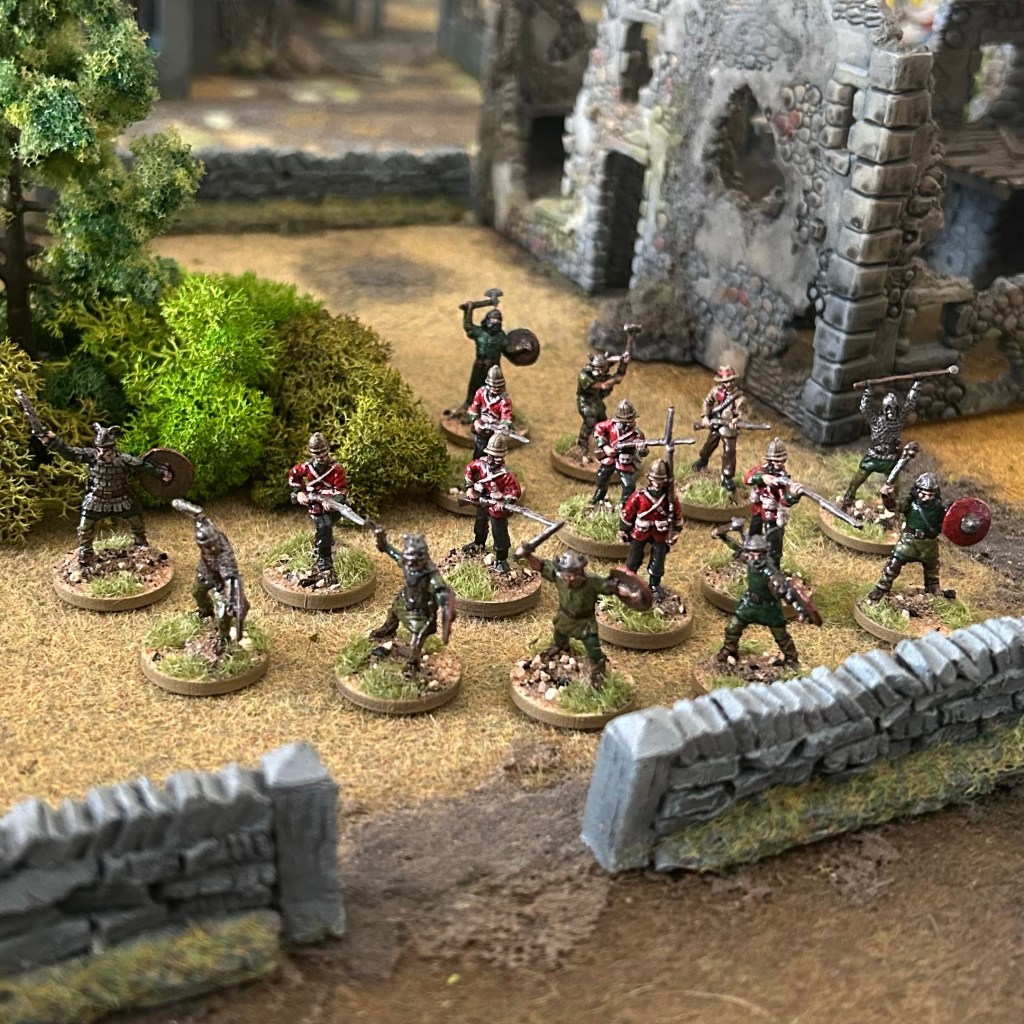
And that could be a viable solution for me, since I’ve jumped back on my Ghost Legions train…
However, one of the mad things I’ve also realised about Ghost Legions, is that if I can get this ruleset right, I could effectively use it for playing a normal historical game in any period of history. Now wouldn’t that be fun? Especially since I’ve not been painting my guys as Ghosts, but I have been painting them in (at least plausible) historical schemes.
So, if I want to have some WW1/2 fun, I can’t exactly have submachine guns shredding the armour on a Panther can I?
So tanks will have to behave like tanks. You’ll need your poor Brit to get his PIAT into the right position to knock out that Panzer!
But what is my poor medieval Spanish army to do? Well, they can take some Ghosts of course!
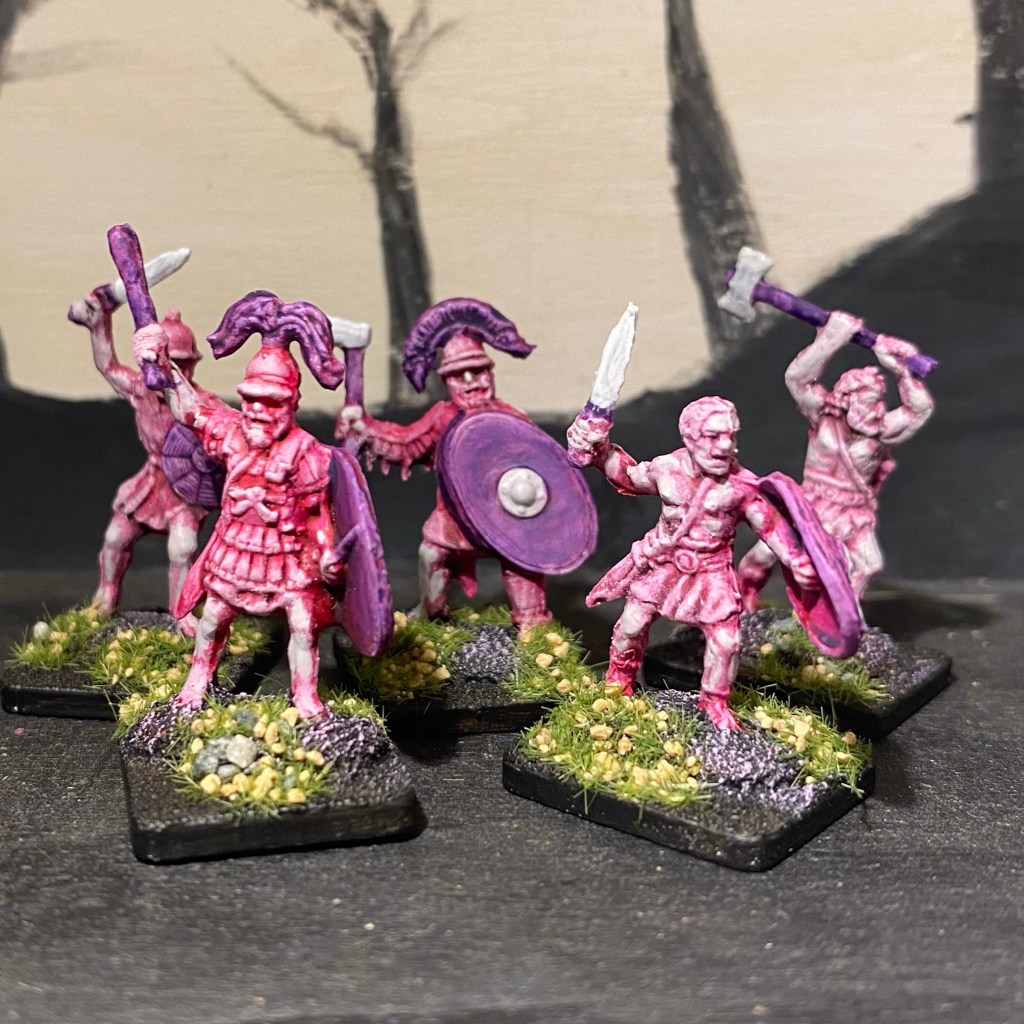
Now, two things…
First you might be thinking aren’t they all Ghosts, since that’s my justification for this whole ahistorical thing.
Second you might be thinking, aren’t you already using mixed history forces? Just throw in a PIAT team with your Viking horde, or them take a tank, why not?
True on both counts.
However, second point first… one of the big things I had in mind for Ghost Legions was players should have the ability to pick up any box of 1/72 historical figures and have a playable force. Not everyone has the expendable income that I am fortunate enough to have, and so buying two, three or four boxes so you can have all the options you needed wasn’t something I wanted to make a necessity. I wanted basically zero barriers to entry.
First point second… metaphysically, philosophically and theologically speaking… who’s to say there isn’t more than one kind of Ghost?

So in my brain… I’m imagining that most Ghosts in the Underworld behave very much like we do in our Overworld. The world to them is physical, they have to move around walls, they have to treacherously cross fast flowing rivers, they have to scale cliffs. Them and their environment is all made of the same ghost stuff. However there is another kind of ghost, the kind of ghost which in the Underworld, behaves like the rest of ghost-kind do when they accidentally cross over into our world. They are frequently translucent, and don’t need to worry about rough terrain penalties to their movement speeds (I think I heard that once on most haunted).
And for my purposes, and in answer to the problem/question of tanks, this other kind of ghost doesn’t worry about tank armour. It’s a haunting image… a Sherman tank crew having their crew compartment overrun by ethereal knights… it’s kinda cool.
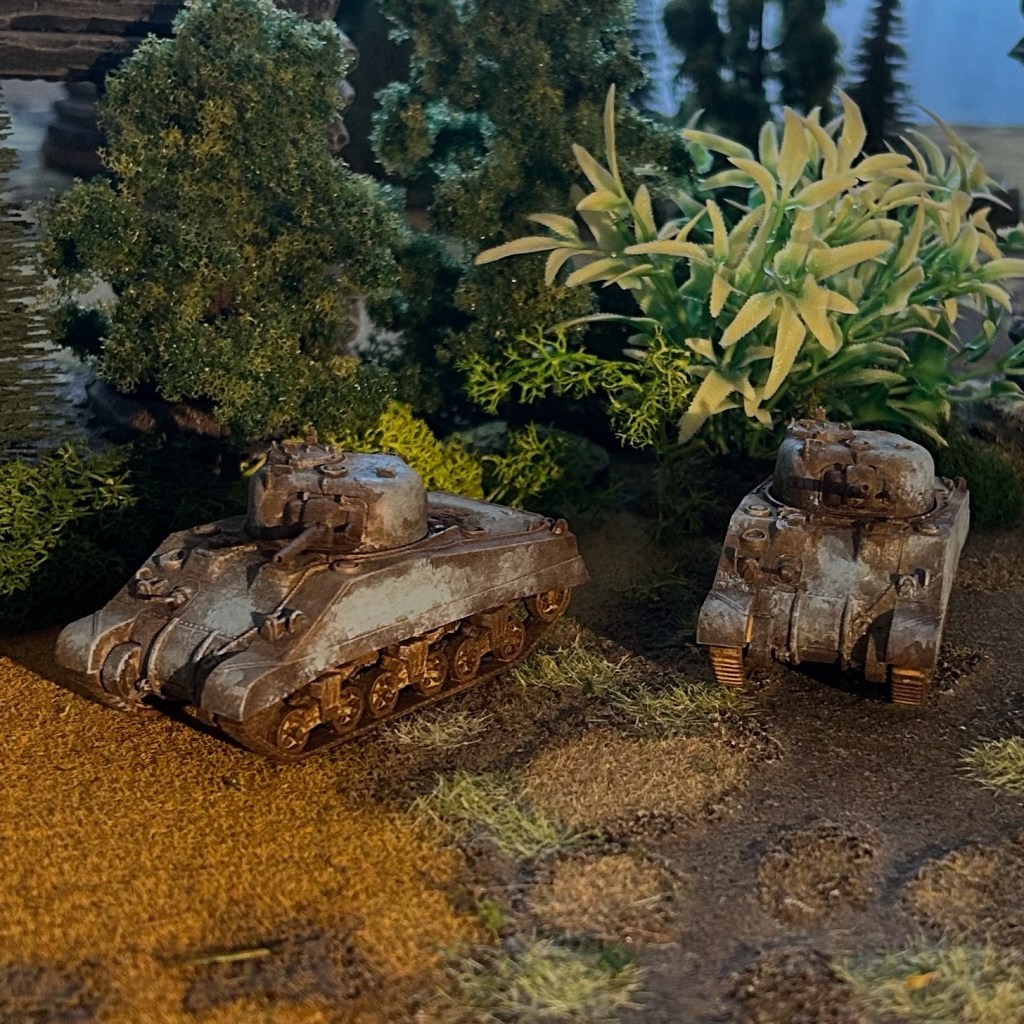
So when you grab that box of ancients or medievals, remember to paint a few up in that more traditional ghostly scheme, so they can knock out tanks for you, or take a whole force of ‘ethereals’. Since the other big barrier to entry into any wargame is time, it’s why I was painting everything ghostly to begin with!


I wonder what the rules were for Warhammer Spirit Host. Could they pass through walls and thus infiltrate castles and also attack the crews of steam tanks.
Here is a fun thing about mixed era gaming (even without ghosts). I have been writing on my blog, Quantrill’s Toy Soldiers about the wargaming of Frank Perry and his pal Ken Gillings and later his son Ross Perry. Ken and Frank were gaming since 1925 and had to use what was available, various 54mm cowboys, Indians, ceremonial Brits and WW1 types. They created a whole fictitious world (much as I do and after their inspiration) of nations at different technological levels. Frank wrote The First Book of Wargaming and The Second Book of Wargaming in the 1970s (rare books now).
In the 1980s Ken and Ross wrote some articles in Plastic Warrior magazine (issues 2 and 3) and among recollections was an ancient Egyptian shooting a helicopter pilot with an arrow and a WW1 tank being mobbed by a horde of ancient Egyptians so that the occupants suffocated!
Apparently (according to a recent email from Ross) the copter was rescuing the wounded and the Egyptian was able to shoot through the open door.
I liked the older 40K tank rules especially the different armor for side, front and rear. I still use similar rules. Foot sloggers had more of a chance to damage the rear of the tank by placing grenades. Orks with power claws, etc also could easily damage tanks. Historically tanks were vulnerable to flame weapons that penetrated air vents and openings.
In the Abyssinian war the Italians used tankettes but even tribesmen armed with swords and shields were able to stick logs into the tracks to immobilize the tankettes and trap or burn the crews.